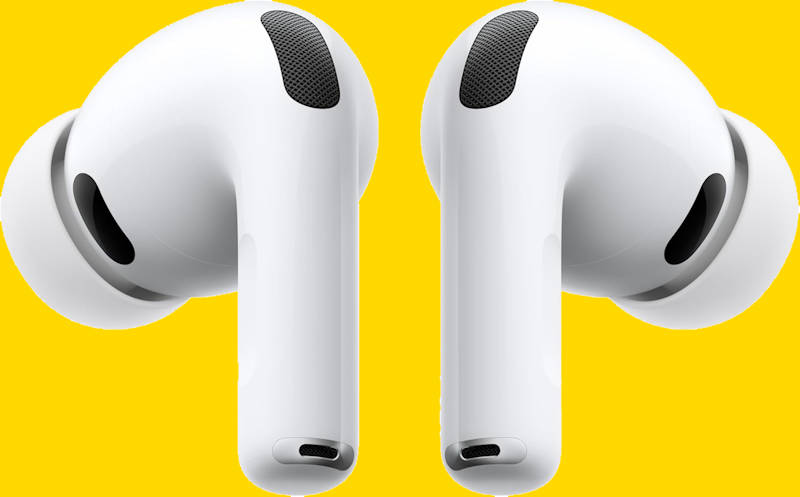
When Apple launched the AirPods Pro 3 six months ago, the keynote was filled with the usual superlatives: “magical,” “revolutionary,” and claims of “2x better” Active Noise Cancellation (ANC). Now that the marketing dust has settled and we've put over 500 hours of real-world use into these earbuds, it's time to evaluate the engineering.
Are the acoustic and silicon upgrades in AirPods Pro 3 actually worth your money, or is this just an iterative update disguised by computational audio tricks?
Let's break down the hardware, the physics of the new ANC pipeline, the biometrics, and how the battery chemistry is holding up half a year later.
Some “hidden” features of AirPods Pro 3 are discussed here.
1. Material Science: The Foam-Infused Tips and Acoustic Impedance
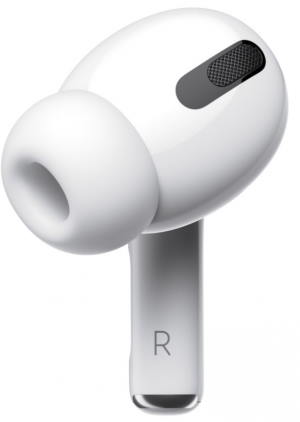
The most significant physical change to the AirPods Pro 3 isn't the slightly reduced chassis volume; it's the shift from pure silicone ear tips to a foam-microsphere composite. Apple marketed this as a comfort feature, but its real purpose is acoustic impedance matching.
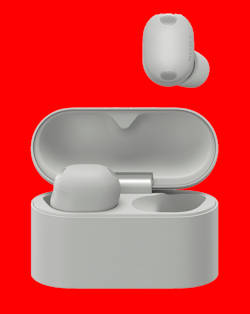
Pure silicone is highly compliant but struggles to create a perfect high-frequency seal in irregularly shaped ear canals. By injecting closed-cell memory foam microspheres into the silicone matrix, the tips now exhibit viscoelastic properties. They deform under body heat to fill micro-gaps, drastically improving passive noise isolation (PNI) before the digital signal processing (DSP) even kicks in. Interestingly, Song WF-1000XM6 also updated the tip material for better acoustics.
This improved seal lowers the resonance frequency of the ear canal and minimizes low-frequency acoustic leakage. The result is a flatter sub-bass response curve and less reliance on the internal feedback microphone to dynamically EQ the low-end via Apple's Adaptive EQ algorithm.
Please note that you need to pay extra attention when cleaning the new foam-infused tips, as explained in the AirPods Pro 3 maintenance guide.














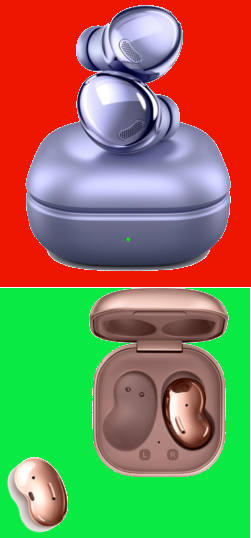
 AirPods Pro
