• Skip to content
  • Skip to primary sidebar
  • Home
  • Headphone 101
  • Sports
  • Galaxy Buds
  • AirPods
  • Sony

Headphone Guide Pro

  • Home
    • About
    • Contact
  • Headphone 101
    • Bluetooth LE Audio and the LC3 Codec: A Technical Deep Dive
    • The Physics and Engineering of Super Wide Band (SWB) Voice
    • True Wireless Stereo (TWS) Explained
    • What is active noise canceling (ANC)? How active noise-cancelling headphones work?
    • Bluetooth Codec for Wireless Headphones and Earbuds: Everything You Need to Know
      • Unleashing the Power of LDAC Codec: How to Enable Hi-Res Audio on Android Devices with WF-1000XM4, WF1000-XM5, WF-1000XM6, and WH-1000 series?
      • What is Samsung Seamless Codec? 4 things you should know about this new codec
      • What are the differences among in-ear, on-ear and over-ear headphones?
  • Sports
    • A Complete Guide for Jabra Elite Sport
  • Galaxy Buds
    • The Complete Technical Guide to the Galaxy Buds 4 & Buds 4 Pro
      • The Evolution — What’s New in Galaxy Buds 4 and Galaxy Buds 4 Pro?
      • Galaxy Buds 4 as an AI Earbud — Tips, Tricks, and Galaxy AI
      • The Right Fit of Galaxy Buds 4 — User Personas & Recommendations
      • Head-to-Head — Galaxy Buds 4 vs. Buds 4 Pro
      • The Flagship Face-off: Galaxy Buds 4 Pro vs. AirPods Pro 3, Sony WF-1000XM6, and Bose QC Ultra Earbuds II
    • Top 10 new features of Galaxy Buds 3 and Galaxy Buds 3 Pro
      • Galaxy Buds 3 vs Galaxy Buds 3 Pro: What are the differences?
    • History of Galaxy Buds
    • What is Samsung Seamless Codec? 4 things you should know about this new codec
    • How to use widgets to check battery levels and control Galaxy Buds 2, Galaxy Buds Pro, Galaxy Buds Live, Galaxy Buds+, and Galaxy Buds?
    • Galaxy Buds 2 vs Galaxy Buds Pro: the Top 8 Pros and Cons
    • Samsung Galaxy Buds Live vs Samsung Galaxy Buds Plus vs Apple AirPods Pro
      • Layout of Galaxy Buds Live
      • How to charge Galaxy Buds Live battery?
      • How to use touch control on Galaxy Buds Live?
      • 4 ways to check Galaxy Buds Live battery level
      • How to manage Galaxy Buds Live in Galaxy Wearable App?
      • Galaxy Buds Pro vs Galaxy Buds Live: what’s new in Galaxy Buds Pro?
    • How to use Samsung Galaxy Buds and Galaxy Buds+?
      • 5 best new features and improvements of Galaxy Buds Plus (Galaxy Buds+ vs Galaxy Buds)
  • AirPods
    • AirPods Pro 3: The Complete Technical Guide and Long-Term Review
      • 6 Months Later: The Technical Reality of the AirPods Pro 3
      • AirPods Pro 3 vs. Audiophile Earbuds: Does Apple Finally Compete?
      • Beyond Audio: The Hidden Features of the AirPods Pro 3
      • The Ultimate Student Setup: Maximizing AirPods Pro 3 for Focus and Study
      • Surviving the 9-to-5: AirPods Pro 3 for Commuting and Open Offices
      • Ditch the Watch: How to Track Workouts Using Only Your AirPods Pro 3
      • AirPods Pro 3 Heart Rate Monitor Accuracy: Tested Against a Chest Strap
      • How to Clean and Maintain the New Foam-Infused AirPods Pro 3 Tips? A Complete AirPods Pro 3 Maintenance Guide
    • New Features for AirPods Pro in iOS 17
    • AirPods Pro 2 New features explained
    • How to Use and Adjust Force Sensor on AirPods Pro like a Pro?
    • AirPods 3 vs AirPods 2: Top 8 improvements and new features of AirPods 3
    • AirPods 3 vs AirPods Pro: which one should you choose?
    • Top 10 new features of AirPods Pro (vs AirPods 2)
  • Sony
    • Unleashing the Power of LDAC Codec: How to Enable Hi-Res Audio on Android Devices with WF-1000XM4, WF1000-XM5, WF-1000XM6, and WH-1000 series?
    • Sony WH-1000XM6: the Definitive Guide
    • The Ultimate Guide to the Sony WF-1000XM6: Everything You Need to Know
      • Sony WF-1000XM6 Review: The King Returns (And It’s Finally Matte)
      • Sony WF-1000XM6 vs. WF-1000XM5: Evolution or Revolution? A Technical Deep Dive
      • Are the WF-1000XM6 High-Fidelity? Testing LDAC & 32-Bit Processing
      • Can You Take a Meeting in a Coffee Shop? Sony WF-1000XM6 Microphone & AI Test (Call Quality)
      • Sony WF-1000XM6 vs. AirPods Pro 3: The Architecture of Ecosystems
      • Sony WF-1000XM6 vs. Bose QC Ultra Earbuds Gen 2: The Battle for Silence

Bone Conduction Headphones Buyer’s Guide: 2026 Edition

Bluetooth headphones, Headphone 101, sports headphones

The 2026 market for bone conduction audio has reached a technical maturity where the primary engineering hurdle is no longer basic “audibility,” but the management of Acoustic Impedance (Z). Unlike traditional air-conduction drivers that move a lightweight diaphragm against the low resistance of air, bone conduction transducers must move a significant mass against the high resistance of the human skull.

If you are searching for the best bone conduction headphones 2026 has to offer, you must understand that every device on this list is a physical solution to the “2 kHz Wall“—the biological phenomenon where the human cranium absorbs high-frequency energy at a rate of approximately 12 dB/octave.

To solve this, premium flagships utilize advanced Digital Signal Processing (DSP) and exotic transducer materials to maintain fidelity without inducing skin-contact fatigue. Conversely, budget bone conduction headphones rely on brute-force mechanical excursion, which introduces physical trade-offs.

This 2026 Bone Conduction Headphones Buyer's Guide breaks down the current market into three distinct tiers—Flagship, Mid-Range, and Entry-Level—to help you navigate the acoustic and ergonomic compromises of each price point.

Tier 1: The 2026 Flagships ($180 – $250) of Bone Conduction Headphones

The bleeding edge of solid-state audio. These devices utilize multi-driver arrays, advanced DSP, and premium alloys to minimize tactile vibration and maximize frequency response.

1. Shokz OpenRun Pro 2: The Dual-Transducer Benchmark

Shokz remains the incumbent market leader, utilizing their proprietary DualPitch architecture to solve the high-frequency attenuation problem.

  • Transducer Tech: It employs a Coaxial Dual-Driver system. A dedicated bone conduction unit handles the high and mid frequencies, while a secondary air-conduction driver handles the low-end frequencies from 60 Hz to 500 Hz.
  • The “Tickle” Solution: By splitting the frequency load and offloading the bass to a non-vibrating air-conduction unit, Shokz reduces the mechanical excursion required by the bone conduction actuator. This keeps the vibration below the human tactile threshold, preventing the “itchy” skin sensation common in legacy bone conduction designs.
  • Leakage: Uses DirectPitch technology, which utilizes precisely angled vents to create out-of-phase sound waves that cancel out air-conducted leakage for improved privacy.
SHOKZ New OpenRun Pro 2- Bone Conduction Headphones, Open-Ear Bluetooth Wireless Sport Earphones for Running, Workouts - Sweat Resistant, Secure Comfortable Fit -Deep Bass, Smart Mic, Reflective Strip
SHOKZ New OpenRun Pro 2- Bone Conduction Headphones, Open-Ear Bluetooth Wireless Sport Earphones for Running, Workouts – Sweat Resistant, Secure Comfortable Fit -Deep Bass, Smart Mic, Reflective Strip
  • Unparalleled Audio and Premium sound – Dual drivers combine the clear highs of Bone Conduction Tech with the deep bass of Air Conduction
… Read the rest

Bone Conduction Audio Technology: A Technical Breakdown

Bluetooth headphones, Headphone 101

Bone Conduction Audio Technology: A Technical Breakdown

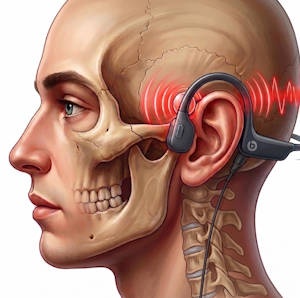
When we think of personal audio, we naturally think of the air. For over a century, headphone engineering has focused entirely on acoustic drivers pushing air molecules into our ear canals to vibrate our eardrums. However, a completely independent class of audio hardware has quietly matured into a dominant force in the consumer market: bone conduction audio.

If you want to understand how bone conduction headphones work past the marketing copy, you have to look directly at the biophysics of acoustic impedance and mechanical wave propagation. It is a world where your skull acts as a transmission medium, and where engineers must design hardware that battles the physical limitations of human bone.

In this comprehensive technical breakdown, we will isolate the physical differences between air and bone conduction pathways, dissect the core mechanical bottlenecks of solid-state transducers, and map out how input sensors utilize the same physics in reverse.

1. The Critical Distinction: Bone Conduction vs. Directional Air Audio

Before we dissect the biophysics of cranial mechanics, we must clear up a massive piece of marketing confusion. In the modern consumer audio space, the term “open-ear” is frequently used as a broad umbrella to describe two completely different physical technologies:

  • True Bone Conduction: Uses electromechanical actuators to convert audio data into physical micro-vibrations. These waves completely bypass the air, the outer ear, and the eardrum, traveling directly through your temporal bone to stimulate the internal hearing organ (the cochlea).
  • Open-Ear Directional Audio: Uses traditional moving-coil or planar magnetic drivers placed slightly outside the ear canal to project sound waves through the air (aka air conduction). It relies on advanced phase manipulation and acoustic dipole cancellation to keep the sound targeted at your ear canal while minimizing leakage to the outside world.

Editor's Note: If you are looking for headphones that clip onto your ear cartilage or glasses that use microscopic directional speakers (like the Ray-Ban Meta Smart AI Glasses, Bose Ultra Open Earbuds, or Nothing Ear Open), you are looking for Directional Air Conduction, which we tear down in our separate companion guide (coming soon). This article deals strictly with bone conduction.

2. The Biophysics of Hearing: Air vs. Bone Conduction

To understand why bone conduction feels fundamentally different from standard audio, we must trace the anatomical path that acoustic energy takes to reach your brain.

The Air Conduction Pathway

In traditional listening, sound … Read the rest

Science And Architecture of Bluetooth Auracast

Bluetooth headphones, Headphone 101, wireless earbuds

Science And Architecture of Bluetooth Auracast

For the past twenty-five years, wireless audio has been defined by a strict, unbreakable rule: monogamy. If you paired your headphones to your smartphone, that audio stream was a closed, proprietary tunnel. Sharing what you were listening to meant physically handing an earbud to someone else or navigating frustrating, proprietary dual-audio software workarounds.

This limitation wasn't a lack of imagination; it was a fundamental constraint of radio frequency architecture. However, the introduction of Bluetooth Auracast technology represents the most radical architectural tear-down of the Bluetooth standard since its inception.

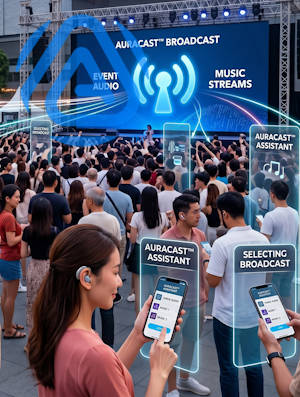
If you are a tech enthusiast wondering exactly how does Auracast work, it is crucial to understand that it is not simply a new pairing mode. It is a complete rewrite of the Bluetooth protocol stack, shifting from a connection-oriented, point-to-point topology to a connectionless, point-to-multipoint broadcast architecture.

In this Bluetooth Auracast deep dive, we will dissect the underlying physical layers, the mathematical efficiencies of the LC3 codec, the complex triad of hardware required (Broadcasters, Assistants, and Receivers), and why your legacy television cannot simply be updated to support the Bluetooth LE Audio broadcast standard.

1. The Legacy Constraint: Classic Bluetooth Architecture

To appreciate the engineering leap of Auracast, we must first examine why the “Bluetooth monogamy” rule existed in the first place.

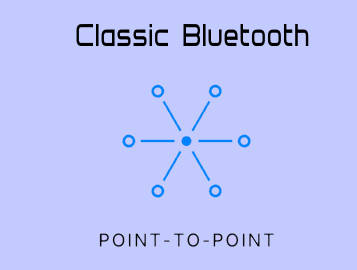
Classic Bluetooth (BR/EDR – Basic Rate/Enhanced Data Rate) operates on a “Piconet” topology. In a Piconet, one device acts as the Master (your smartphone), and it can connect to up to seven Active Slaves (your earbuds, smartwatch, car stereo).

While a Master can theoretically connect to multiple devices, the Advanced Audio Distribution Profile (A2DP)—the protocol used for streaming high-fidelity stereo music—is strictly point-to-point. The Master device uses a Polling mechanism, rapidly switching its radio transceiver between active slaves in predefined time slots.

When analyzing Auracast vs standard Bluetooth, the mathematical limitation of classic Bluetooth becomes obvious. If a smartphone tries to send an identical 328 kbps SBC audio stream to three different pairs of headphones simultaneously, it must duplicate the packet, encrypt it three separate times with three different link keys, and transmit it three separate times during distinct time slots.

This rapidly exhausts the channel capacity defined by the Shannon-Hartley theorem:

C=B\log_2(1+S/N)

Where C is the channel capacity in bits per second, B is the bandwidth (1 MHz channels in classic Bluetooth), andS/N is the signal-to-noise ratio (SNR). The bandwidth simply cannot support … Read the rest

Bluetooth LE Audio and the LC3 Codec: A Technical Deep Dive

AirPods Guides, Bluetooth headphones, Headphone 101, Samsung Galaxy Buds, Sony 1000X, sports headphones, wireless earbuds

Bluetooth LE Audio and the LC3 Codec: A Technical Deep Dive

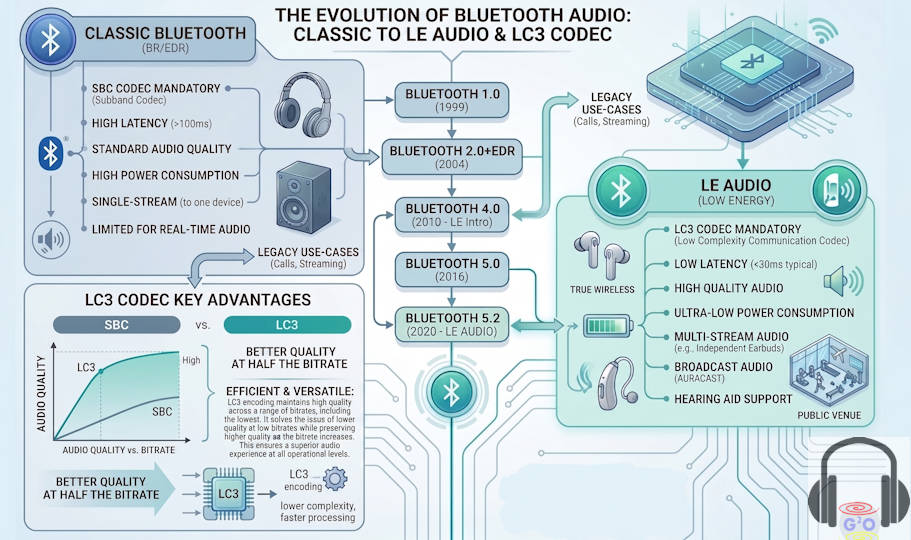
For over two decades, the wireless audio industry has been wrestling with a protocol that was never originally designed for high-fidelity music. When you listen to a podcast on standard Bluetooth earbuds and headphones, you are utilizing an architecture—Classic Bluetooth (BR/EDR)—that traces its roots back to 1999. It is power-hungry, prone to latency, and mathematically inefficient.

The introduction of Bluetooth 5.2 fundamentally changed this trajectory. By taking the Low Energy (LE) radio state—which was previously restricted to simple, intermittent IoT data like smartwatch heart rates—and re-engineering its MAC (Media Access Control) layer to support continuous audio, the Bluetooth Special Interest Group (SIG) executed the largest architectural rewrite in the protocol's history.

If you want Bluetooth LE Audio explained beyond the marketing bullet points, you must look at the protocol stack. In this technical deep-dive, we will dissect the failure points of Classic Bluetooth, the implementation of Isochronous Channels, the mathematical superiority of the LC3 codec, and how the new Bluetooth LE Audio architecture finally solves the master-slave problem that has plagued True Wireless Stereo (TWS) earbuds for years.

1. The Breaking Point: LE Audio vs Classic Bluetooth

To understand why LE Audio was necessary, we must understand the fundamental flaws of the Advanced Audio Distribution Profile (A2DP) running over Classic Bluetooth (Basic Rate / Enhanced Data Rate, or BR/EDR).

Classic Bluetooth operates on a connection-oriented “Piconet” topology. It relies on an asynchronous, polling-based data transfer method. When your phone sends an audio packet to your earbuds, it must wait for an Acknowledgment (ACK) packet to confirm receipt. If the 2.4 GHz spectrum is crowded (by Wi-Fi routers or microwaves) and the packet drops, the phone must re-transmit it.

To prevent the audio from stuttering during these re-transmissions, A2DP requires a massive audio buffer at the receiver (the earbud or headphone). This buffer is the primary source of Bluetooth latency, frequently introducing a delay () of 150 ms to 250 ms, making it virtually useless for competitive gaming or real-time video editing.

Furthermore, Classic Bluetooth is incredibly power inefficient. Maintaining the BR/EDR radio link requires a constant, high-current draw, which is why early wireless earbuds struggled to surpass three hours of battery life.

The LE Audio vs Classic Bluetooth debate is not an iterative comparison; it is a complete structural replacement. LE Audio discards the BR/EDR radio completely, shifting continuous, high-bandwidth audio streams onto the ultra-low-power LE radio state.

Apple Watch
… Read the rest

The Physics and Engineering of Super Wide Band (SWB) Voice

Bluetooth headphones, Headphone 101, noise cancelling headphones, Samsung Galaxy Buds, wireless earbuds

The Physics and Engineering of Super Wide Band (SWB) Voice

If you have ever purchased a pair of $300 flagship wireless earbuds, paired them with a $1,200 smartphone, and made a phone call, you have likely experienced a jarring cognitive dissonance. Your music is rendered in pristine 24-bit/96kHz lossless fidelity, yet the voice of the person you are speaking to sounds compressed, robotic, and trapped inside a tin can.

For decades, voice telephony has been the acoustic bottleneck of consumer electronics. However, a quiet paradigm shift has been occurring beneath the surface of spec sheets. Technologies marketed obliquely by companies like Samsung (in the Galaxy Buds 3 and Buds 4 series) as “Super Wideband Call Quality” or by Qualcomm as “aptX Voice” represent a fundamental teardown of legacy telecommunications standards.

This is Super Wide Band (SWB) audio. In this definitive guide explaining Super Wide Band call quality and technology, we dissect the physical limits of human speech, the mathematics of digital sampling, and the legacy telecommunications infrastructure that has been choking our audio for over a century.

The Acoustic Physics of Human Speech

To understand why telecommunications networks historically compressed voice, and why Super Wide Band (SWB) is necessary to fix it, we must analyze the frequency spectrum of human phonation.

Human speech is not a monolithic sound; it is a complex combination of fundamental frequencies and harmonics generated by the vocal cords (voicing) and turbulent noise generated by the oral cavity (frication).

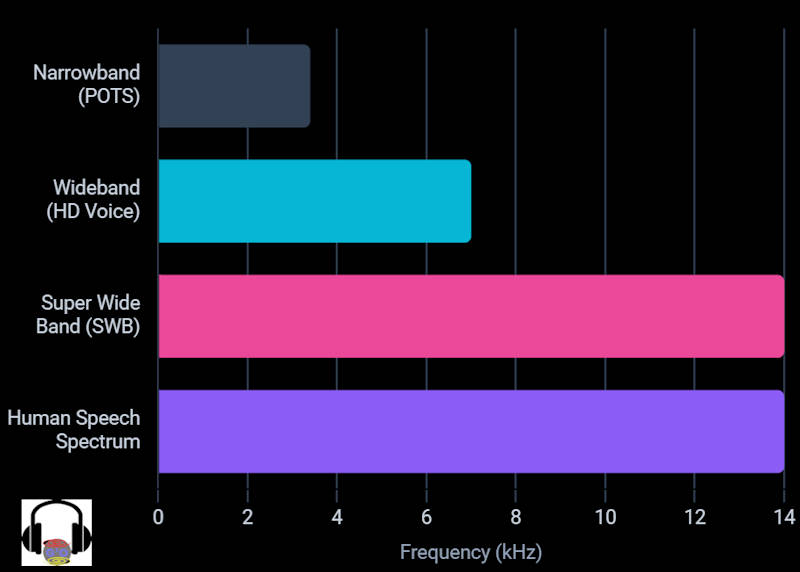
The fundamental frequency () of an adult human voice typically ranges from 85 Hz to 255 Hz. However, intelligibility—the cognitive ability to parse words—does not reside in the fundamental frequency. It resides in the formants and the high-frequency consonants.

  • Vowels and Formants (300 Hz to 3 kHz): The shape of the vocal tract creates acoustic resonances called formants (). These carry the power and tonal identity of the voice.
  • Fricatives and Sibilants (4 kHz to 14 kHz: Sounds like /s/, /f/, /th/, and /sh/ are produced by forcing air through narrow channels in the mouth. These sounds possess very little acoustic energy but stretch high into the frequency spectrum. The /s/ sound, for instance, has significant acoustic energy peaking between 6 kHz and 10 kHz.

If you aggressively filter out frequencies above 3.4 kHz, the human brain can no longer reliably distinguish between an /f/ and a /th/, or an /s/ and an /f/. … Read the rest

True Wireless Stereo (TWS) Explained

Bluetooth headphones, Headphone 101, noise cancelling headphones, wireless earbuds

True Wireless Stereo (TWS) Explained

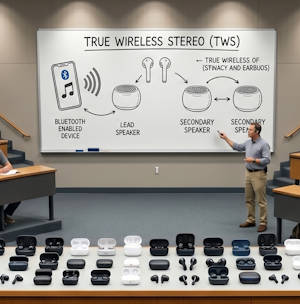
When you pull a pair of flagship earbuds out of their charging case, insert them into your ears, and press play, the immediate synchronization of stereo audio feels like magic. However, behind that seamless user experience lies one of the most notoriously difficult radio frequency (RF) engineering challenges of the 21st century: True Wireless Stereo (TWS).

For years, “TWS” was largely a marketing buzzword rather than a standardized protocol. If you are searching for True Wireless Stereo explained at an engineering level, you must understand that the human body is inherently hostile to wireless data transmission.

To definitively answer what TWS technology is, we have to look past the spec sheet. In this technical deep-dive, we will explore everything about True Wireless Stereo (TWS): the physics of the “Head-Shadow” effect, the dark ages of proprietary Bluetooth sniffing, the mathematical reality of phase distortion, and how the industry finally standardized the hardware to solve the problems that have plagued wireless audio for a decade.

The Physics of the Enemy of TWS: The Head-Shadow Effect

To understand how wireless earbuds work—and more importantly, why they frequently fail—we must start with the physics of the 2.4 GHz Industrial, Scientific, and Medical (ISM) radio band used by Bluetooth.

Radio waves are a form of electromagnetic radiation. How they interact with physical obstacles depends entirely on their wavelength (). We can calculate the wavelength of a Bluetooth signal using the speed of light (c) and its frequency (f):

\lambda = \frac{c}{f} = \frac{3 \times 10^8\text{ m/s}}{2.4 \times 10^9\text{ Hz}} \approx 12.5\text{ cm}

A wavelength of 12.5cm (~4.9 inches) presents a massive physiological problem: it is roughly the width of an adult human skull.

When a wavelength is roughly the same size as an obstacle, the wave does not easily diffract (bend) around it. Furthermore, the human head is primarily composed of water and dense tissue, both of which are exceptionally efficient absorbers of 2.4 GHz microwave radiation.

This creates the head-shadow effect that Bluetooth engineers constantly battle. In the early days of wireless audio, sending a signal from your right pocket to your left earbud meant the radio wave had to penetrate human tissue, resulting in massive signal attenuation (signal loss) of up to 20dB to 30dB. This physical barrier is the primary reason early wireless earbuds suffered from constant dropouts and desynchronization.

Sony WF-1000XM6 The Best
… Read the rest

The Complete Technical Guide to the Galaxy Buds 4 & Buds 4 Pro

Bluetooth headphones, Headphone 101, noise cancelling headphones, Samsung Galaxy Buds, wireless earbuds

The Complete Technical Guide to the Galaxy Buds 4 & Buds 4 Pro

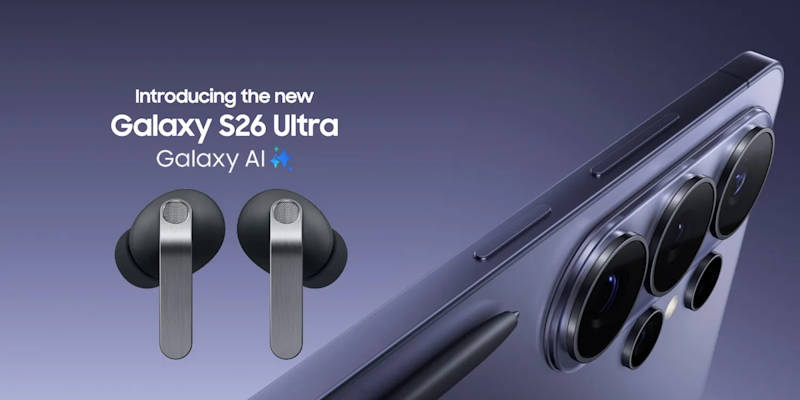
With the rollout of the Galaxy S26 ecosystem, Samsung has executed a fundamental overhaul of its true wireless stereo (TWS) architecture. Moving away from iterative software updates, the 2026 audio lineup introduces entirely new acoustic hardware, next-generation Bluetooth protocols, and a deeper, arguably more restrictive, integration into the Galaxy AI processing pipeline.

Whether you are an audiophile meticulously comparing codec bitrates, a commuter analyzing phase-inversion ANC algorithms, or a power user looking to optimize neural processing features, this guide serves as your master directory.

In this guide, you will find a high-level technical briefing of the new hardware, followed by our comprehensive, 5-part deep-dive series dissecting every aspect of the Galaxy Buds 4 series.

The Executive Briefing: Hardware & Architecture (TL;DR)

For the spec-hunters and impatient readers, here is the raw, unfiltered breakdown of what you need to know before making a purchasing decision on Galaxy Buds 4 and Galaxy Buds 4 Pro.

The Diverging Form Factors

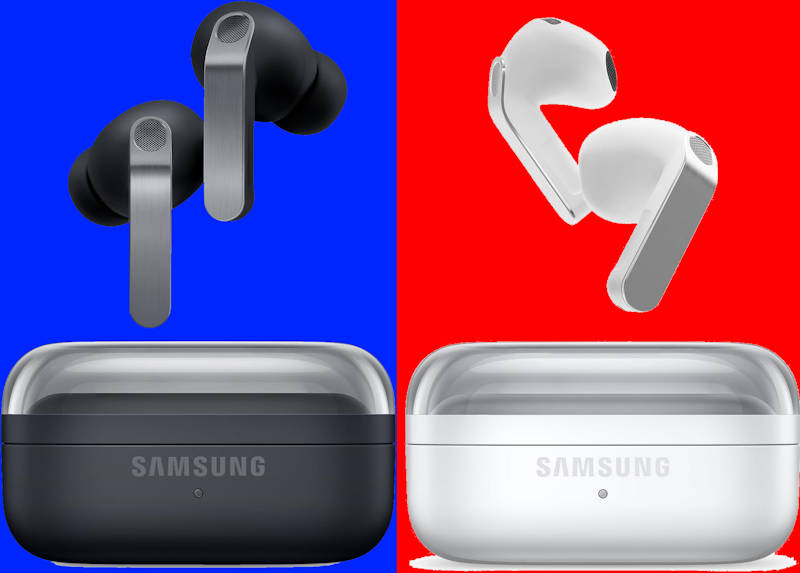
Samsung has officially split its lineup by acoustic seal. The $179 Galaxy Buds 4 utilizes an open-fit (unsealed) design, relying on a single 11mm dynamic driver. It is engineered primarily for all-day comfort and spatial awareness, though it suffers from the inevitable sub-bass roll-off inherent to unsealed ear canals.

The $249 Galaxy Buds 4 Pro utilizes a canal-fit (silicone tip) design, providing the 15dB+ of passive isolation required for critical listening.

Samsung Galaxy Buds 4 (2026) AI True Wireless Bluetooth Earbuds + $20 Gift Card, Noise Cancelling, Hi-Res Audio, 1-Way Speaker, New Fit, IP54, Live Translation, Black [US Version, 2 Yr Warranty]
Samsung Galaxy Buds 4 Pro Ai Advanced 2 Way Speakers Wireless Bluetooth 6.1 Noise Cancelling Real-Time Interpreter Redesigned Comfort Fit Version Latino Americana (White SM-R640NZWALTA)
Samsung Galaxy Buds 4 (2026) AI True Wireless Bluetooth Earbuds + $20 Gift Card, Noise Cancelling, Hi-Res Audio, 1-Way Speaker, New Fit, IP54, Live Translation, Black [US Version, 2 Yr Warranty]
Samsung Galaxy Buds 4 Pro Ai Advanced 2 Way Speakers Wireless Bluetooth 6.1 Noise Cancelling Real-Time Interpreter Redesigned Comfort Fit Version Latino Americana (White SM-R640NZWALTA)
Amazon Prime
-
$199.99
$186.70
-
-
Buy on Amazon
Buy on Amazon
Samsung Galaxy Buds 4 (2026) AI True Wireless Bluetooth Earbuds + $20 Gift Card, Noise Cancelling, Hi-Res Audio, 1-Way Speaker, New Fit, IP54, Live Translation, Black [US Version, 2 Yr Warranty]
Amazon Prime
$199.99
-
Buy on Amazon
Samsung Galaxy Buds 4 Pro Ai Advanced 2 Way Speakers Wireless Bluetooth 6.1 Noise Cancelling Real-Time Interpreter Redesigned Comfort Fit Version Latino Americana (White SM-R640NZWALTA)
-
$186.70
-
Buy on Amazon

Acoustic Overhaul: The Dual-Driver Setup

The defining upgrade of the Pro model is its 2-way speaker system. It pairs an 11mm dynamic woofer (with a 20% larger vibration area than the previous generation) with a … Read the rest

The Right Fit of Galaxy Buds 4 — User Personas & Recommendations

Bluetooth headphones, Headphone 101, Samsung Galaxy Buds, wireless earbuds

The Right Fit of Galaxy Buds 4 — User Personas & Recommendations

Galaxy Buds 4 represents a fundamental rebuild of Samsung’s wireless earbuds series. It is comparable to the other flagship wireless earbuds with Galaxy AI integrations. But technical specifications only tell half the story. User persona matters. The ultimate question remains: which earbuds belong in your pockets?

Audio is deeply subjective, and the hardware you choose must align with the physical realities of your daily life.

Whether you are searching for the best wireless earbuds for Samsung users overall, or you have a highly specific use case, this Galaxy Buds 4 guide breaks down the Galaxy Buds 4 series by user persona to help you make an informed purchasing decision.

User Persona 1: The Commuter & Frequent Flyer

If your day involves crowded trains, bustling streets, or the constant drone of an airplane cabin, isolation is your primary metric.

When evaluating the Galaxy Buds 4 vs Galaxy Buds 4 Pro for commuting, the decision is heavily skewed toward the $249 Pro model. The canal-fit design with silicone tips provides the necessary passive isolation to block out high-frequency chatter. More importantly, the Adaptive ANC 2.0 algorithm specifically targets the low-frequency rumble (50Hz to 200Hz) of jet engines and bus tires. The ANC on Galaxy Buds 4 Pro is close to, if not even comparable to, that of competitors, including AirPods Pro 3, Sony WF-1000XM6, and Bose QC Ultra Earbuds II.

The standard $179 Galaxy Buds 4, due to their open-fit nature, simply cannot physically seal the ear canal. While their ANC 1.0 can take the edge off a loud environment, you will inevitably have to crank the volume to unsafe levels to hear your podcasts over a subway screech. For the commuter, the Pro's $70 premium is a necessary investment in hearing protection and sanity.

Samsung Galaxy Buds 4 (2026) AI True Wireless Bluetooth Earbuds + $20 Gift Card, Noise Cancelling, Hi-Res Audio, 1-Way Speaker, New Fit, IP54, Live Translation, Black [US Version, 2 Yr Warranty]
Samsung Galaxy Buds 4 Pro Ai Advanced 2 Way Speakers Wireless Bluetooth 6.1 Noise Cancelling Real-Time Interpreter Redesigned Comfort Fit Version Latino Americana (White SM-R640NZWALTA)
Samsung Galaxy Buds 4 (2026) AI True Wireless Bluetooth Earbuds + $20 Gift Card, Noise Cancelling, Hi-Res Audio, 1-Way Speaker, New Fit, IP54, Live Translation, Black [US Version, 2 Yr Warranty]
Samsung Galaxy Buds 4 Pro Ai Advanced 2 Way Speakers Wireless Bluetooth 6.1 Noise Cancelling Real-Time Interpreter Redesigned Comfort Fit Version Latino Americana (White SM-R640NZWALTA)
Amazon Prime
-
$199.99
$186.70
-
-
Buy on Amazon
Buy on Amazon
Samsung Galaxy Buds 4 (2026) AI True Wireless Bluetooth Earbuds + $20 Gift Card, Noise Cancelling, Hi-Res Audio, 1-Way Speaker, New Fit, IP54, Live Translation, Black [US Version, 2 Yr Warranty]
Amazon Prime
$199.99
… Read the rest

Galaxy Buds 4 as an AI Earbud — Tips, Tricks, and Galaxy AI

Bluetooth headphones, Headphone 101, Samsung Galaxy Buds, wireless earbuds

Galaxy Buds 4 as an AI Earbud — Tips, Tricks, and Galaxy AI

When Samsung unveiled the Galaxy S26 series, “Galaxy AI” was the inescapable buzzword. While AI features are often relegated to photo editing or text generation on the smartphone display, the new Galaxy Buds 4 series acts as the crucial acoustic bridge to these systems.

If you want to know how to use Galaxy AI on Buds 4, the first thing to understand is the hardware pipeline. True wireless earbuds lack the thermal overhead and battery capacity to run native neural processing units (NPUs) for complex AI tasks. Instead, the Galaxy Buds 4 Pro rely on an ultra-low-latency Bluetooth 6.1 link to offload the computational heavy lifting to the S26's Snapdragon or Exynos processor.

In this deep dive, we explore the software ecosystem, providing essential Galaxy Buds 4 Pro tips and tricks to transform your earbuds from passive speakers into active digital assistants with Galaxy AI.

Please note that in this guide, we used Galaxy S26 as a demo. Most of the features also work with Galaxy devices with One UI 8(e.g.,Galaxy S25, Galaxy S24, and Galaxy S23). Besides, all features are available on both Galaxy Buds 4 or Buds 4 Pro.

The Real-Time Interpreter with Galaxy AI

Perhaps the most heavily marketed feature is the live translation capability. For frequent travelers, a comprehensive Galaxy Buds 4 real-time interpreter guide is essential, as the UI can be slightly unintuitive on the first attempt.

The Interpreter feature operates in two distinct modes: Face-to-Face and Phone Call.

In Face-to-Face mode, you hand your unlocked S26 to the person you are speaking with. They speak into the phone's bottom microphone in their native language (e.g., Japanese). The phone's NPU transcribes, translates, and synthesizes the audio, piping the English translation directly into your Galaxy Buds 4 Pro in roughly 0.8 to 1.5 seconds. When you reply, the onboard 16kHz microphones on the Galaxy Buds pick up your English, and the phone's speaker broadcasts the Japanese translation.

In Phone Call mode, the translation is handled entirely in-ear to keep the process private. When the person on the other end of the line speaks (e.g., in Japanese), the S26's processor intercepts the audio from the phone line, translates it, and pipes the English translation directly into your Galaxy Buds 4. When you speak your reply into the Galaxy Buds' microphones, the S26 translates your English … Read the rest

AirPods Pro 3: The Complete Technical Guide and Long-Term Review

AirPods Guides, Bluetooth headphones, noise cancelling headphones, sports headphones, wireless earbuds

AirPods Pro 3: The Complete Technical Guide and Long-Term Review

When Apple announced the AirPods Pro 3, the keynote was dominated by the usual marketing superlatives: “magical,” “revolutionary,” and “industry-leading.” However, for tech enthusiasts, audiophiles, and data-driven athletes, marketing jargon is not enough. We want to know about acoustic impedance, adaptive digital signal processing (DSP), and the biometric accuracy of in-ear photoplethysmography.

Now, several months after their release, the initial hype has settled. We have put the hardware through hundreds of hours of rigorous testing—from the weight room to the subway, and from the library to the audiophile testing bench.

This comprehensive guide serves as your master resource for the AirPods Pro 3. Below, we break down the engineering reality of Apple’s most advanced wearable, connecting you to our in-depth technical deep-dives on everything from sound quality and fitness tracking to hidden features and hardware maintenance.

1. Acoustic Engineering: Sound Quality and ANC Reality

For years, the audiophile community viewed the AirPods line as a masterclass in convenience but a compromise in fidelity. The AirPods Pro 3 attempt to bridge that gap not through high-resolution Bluetooth codecs (e.g., LDAC), but through brute-force computational audio and material science.

The Audiophile Debate: Codecs vs. Computational Audio

If you are reading an AirPods Pro 3 audiophile review, the immediate point of contention is the lack of LDAC or aptX Lossless support. The AirPods Pro 3 still relies on the AAC codec. However,

Apple compensates for this bandwidth limitation with a redesigned “multiport acoustic architecture.” By enlarging the acoustic vents, the earbuds lower the acoustic impedance behind the dynamic driver, drastically increasing transducer excursion. The result is a soundstage that mimics an open-back headphone, delivering sub-bass frequencies (20 Hz to 40Hz) without muddying the midrange.

Apple’s Adaptive EQ further manipulates the sound by utilizing an inward-facing microphone to measure the transfer function of your ear canal in real-time, calculating:

H(f)=\frac{Y(f)}{X(f)}

This ensures the target frequency response is maintained regardless of anatomical variations.

  • Deep Dive: Read our full breakdown: AirPods Pro 3 vs. Audiophile Earbuds: Does Apple Finally Compete?

The “2x Better” ANC Claim

Apple claims the Active Noise Cancellation (ANC) cancels twice as much acoustic energy as the previous generation. In physics, a halving of acoustic power corresponds to a drop of roughly 3 dB. Our testing confirms a measurable ~4dB – 6dB improvement, specifically in the 100Hz to 400Hz band, effectively silencing airplane engines and HVAC systems. This is achieved … Read the rest

The Flagship Face-off: Galaxy Buds 4 Pro vs. AirPods Pro 3, Sony WF-1000XM6, and Bose QC Ultra Earbuds II

Bluetooth headphones, Headphone 101, noise cancelling headphones, Samsung Galaxy Buds, wireless earbuds

The Flagship Face-off: Galaxy Buds 4 Pro vs. AirPods Pro 3, Sony WF-1000XM6, and Bose QC Ultra Earbuds II

Samsung does not exist in a vacuum. While the Galaxy Buds 4 Pro represents the pinnacle of Samsung's internal acoustic engineering, the true test of a $249 audio device is how it performs against the established titans of the industry (Galaxy Buds 4 Pro vs. AirPods Pro 3, Sony WF-1000XM6, and Bose QC Ultra Earbuds II).

In the search for the best noise canceling earbuds 2026 has to offer, consumers are primarily weighing three major alternatives: Apple's AirPods Pro 3, the Sony WF-1000XM6, and the Bose QuietComfort Ultra Earbuds II.

In this flagship face-off, we benchmark the Galaxy Buds 4 Pro against its fiercest competitors to see if it truly is the best earbuds for Samsung Galaxy S26 Ultra users, or if looking outside the ecosystem yields better results.

The Audio Fidelity Battle: Samsung Seamless Codec vs LDAC

When evaluating raw audio fidelity, the limiting factor in wireless audio is rarely the driver; it is the Bluetooth codec.

In a direct Galaxy Buds 4 Pro vs. Sony WF-1000XM6 comparison, the conversation immediately turns to data transfer. Sony’s WF-1000XM6 utilizes the universally adopted LDAC codec, capable of pushing bitrates up to 990 kbps on almost any modern Android device. This allows for near-lossless transmission of FLAC or ALAC files.

Samsung’s response is the proprietary Samsung Seamless Codec (SSC), which dynamically scales up to 24-bit/96kHz depending on connection strength. When paired with an S26/S25/S24/S23 series phone, the Galaxy Buds 4 Pro arguably matches Sony in detail retrieval. The combination of SSC's high bitrate and the Buds' planar tweeter results in a shimmering, airy high-end that Sony’s warmer, bass-leaning dynamic drivers occasionally mask.

However, the Samsung Seamless Codec vs LDAC debate ends in Sony's favor regarding versatility. If you switch to a Google Pixel, the Galaxy Buds 4 Pro drops to a meager AAC connection (~256 kbps), severely bottlenecking the hardware. Sony’s LDAC plays nice with everyone.

Samsung Galaxy Buds 4 (2026) AI True Wireless Bluetooth Earbuds + $20 Gift Card, Noise Cancelling, Hi-Res Audio, 1-Way Speaker, New Fit, IP54, Live Translation, Black [US Version, 2 Yr Warranty]
Samsung Galaxy Buds 4 Pro Ai Advanced 2 Way Speakers Wireless Bluetooth 6.1 Noise Cancelling Real-Time Interpreter Redesigned Comfort Fit Version Latino Americana (White SM-R640NZWALTA)
Samsung Galaxy Buds 4 (2026) AI True Wireless Bluetooth Earbuds + $20 Gift Card, Noise Cancelling, Hi-Res Audio, 1-Way Speaker, New Fit, IP54, Live Translation, Black [US Version, 2 Yr Warranty]
Samsung Galaxy Buds 4 Pro Ai Advanced 2 Way Speakers Wireless Bluetooth 6.1 Noise Cancelling Real-Time Interpreter Redesigned Comfort Fit Version Latino Americana (White SM-R640NZWALTA)
Amazon Prime
-
$199.99
$186.70
-
-
Buy on Amazon
Buy on Amazon
Samsung Galaxy Buds 4 (2026) AI True
… Read the rest

The Ultimate Guide to the Sony WF-1000XM6: Everything You Need to Know

Bluetooth headphones, Headphone 101, noise cancelling headphones, Sony 1000X, sports headphones, wireless earbuds

The Ultimate Guide to the Sony WF-1000XM6: Everything You Need to Know

The release of the Sony WF-1000XM6 in February 2026 marked a significant shift in wireless audio. Sony moved away from the controversial glossy finish of the WF-1000XM5, introduced a massive 32-bit processing upgrade, and integrated native Google Gemini AI.

But are they the right earbuds for you?

Over the past few weeks, we have rigorously tested the WF-1000XM6 in every conceivable scenario—from noisy coffee shops to high-resolution critical listening sessions.

Instead of a single, sprawling review of WF-1000XM6, we broke our analysis into six dedicated deep dives. Whether you are an audiophile, a remote worker, or someone trying to decide between Apple and Sony, use this hub to navigate to the information that matters most to you.

1. The Core Review: Is the WF-1000XM6 the New King?

If you only read one article, make it this one. We break down the new matte chassis, the shift in the center of gravity that fixes the fit issues, and the raw performance of the new QN3e processor.

Read the Full WF-1000XM6 Review Here: Sony WF-1000XM6 Review: The King Returns (And It’s Finally Matte).

  • Key Takeaway: The 11% volume reduction and high-friction matte finish solve the biggest complaints of the WF-1000XM5, making these the most comfortable flagship earbuds Sony has produced.

2. The Upgrade Dilemma: WF-1000XM6 vs. WF-1000XM5

You already own the WF-1000XM5. Should you spend $330 to upgrade? We compare the acoustic impedance, the new 8-mic array, and the differences in sub-bass distortion.

Read the XM6 vs. XM5 Upgrade Guide Here: Sony WF-1000XM6 vs. WF-1000XM5: Evolution or Revolution? A Technical Deep Dive.

  • Key Takeaway: Upgrade if the WF-1000XM5 falls out of your ears at the gym, or if you need superior voice cancellation for office calls. Otherwise, the XM5 remains highly capable.
Sony WF-1000XM6 The Best Truly Wireless Noise Cancelling Earbuds (2026 Model), Bluetooth in-Ear Headphones, with Studio-Quality Sound, Up to 24 Hours of Battery Life, Platinum Silver
Apple AirPods Pro 3 Wireless Earbuds, Active Noise Cancellation, Live Translation, Heart Rate Sensing, Hearing Aid Feature, Bluetooth Headphones, Spatial Audio, High-Fidelity Sound, USB-C Charging
Sony WF-1000XM6 The Best Truly Wireless Noise Cancelling Earbuds (2026 Model), Bluetooth in-Ear Headphones, with Studio-Quality Sound, Up to 24 Hours of Battery Life, Platinum Silver
Apple AirPods Pro 3 Wireless Earbuds, Active Noise Cancellation, Live Translation, Heart Rate Sensing, Hearing Aid Feature, Bluetooth Headphones, Spatial Audio, High-Fidelity Sound, USB-C Charging
-
Amazon Prime
$298.00
$199.00
-
-
Buy on Amazon
Buy on Amazon
Sony WF-1000XM6 The Best Truly Wireless Noise Cancelling Earbuds (2026 Model), Bluetooth in-Ear Headphones, with Studio-Quality Sound, Up to 24 Hours of Battery Life, Platinum Silver
-
$298.00
-
Buy on Amazon
Apple AirPods Pro 3 Wireless Earbuds, Active Noise Cancellation,
… Read the rest

Head-to-Head — Galaxy Buds 4 vs. Buds 4 Pro

Bluetooth headphones, noise cancelling headphones, Samsung Galaxy Buds, wireless earbuds

Head-to-Head — Galaxy Buds 4 vs. Buds 4 Pro

With the launch of the Galaxy S26 ecosystem, Samsung has presented consumers with a stark divergence in its audio lineup. While previous generations often blurred the lines between the base and “Pro” models, 2026 brings a definitive split (Galaxy Buds 4 vs. Buds 4 Pro) in both physical design and acoustic philosophy.

If you find yourself debating between the $179 and $249 tiers, the decision is no longer just about paying more for slightly better sound. The core Galaxy Buds 4 Pro vs Buds 4 differences lie in fundamental architectural choices.

In this comprehensive breakdown, we analyze the engineering beneath the hood to answer the ultimate question: is Galaxy Buds 4 Pro worth it (vs. Galaxy Buds 4), or does the standard model offer everything the modern listener needs?

Ergonomics: Canal-Fit vs Open-Fit Earbuds

The most immediate physical distinction between the two models (Galaxy Buds 4 vs. Buds 4 Pro) is how they interact with your ear canal. This isn't just an aesthetic choice; it fundamentally dictates the acoustic seal and bass response.

The standard Galaxy Buds 4 utilizes an open-fit (unsealed) design, reminiscent of standard AirPods. They rest in the concha of the ear without penetrating the ear canal. For users who suffer from ear fatigue or a feeling of “cabin pressure” from silicone tips, the debate between canal-fit vs open-fit earbuds heavily favors the open design. However, from an acoustic physics standpoint, an unsealed fit leads to immediate sub-bass roll-off. Without a pressurized chamber, low-frequency sound waves leak out before vibrating the eardrum.

Conversely, the Galaxy Buds 4 Pro features a canal-fit design (like AirPods Pro) utilizing medical-grade silicone tips. This creates a physical barrier that provides roughly 15dB to 20dB of passive noise isolation before any software even activates. This seal is absolutely critical for the Pro’s planar tweeter to accurately reflect high-frequency micro-details without environmental masking.

Samsung Galaxy Buds 4 Pro (2026) AI True Wireless Bluetooth Earbuds + $30 Gift Card, Hi-Res Audio, 2-Way Speaker, ANC 2.0, Optimized Comfort, IP57, Live Translation, Black [US Version, 2 Yr Warranty]
  • BUNDLE: Prime members get an Amazon Gift Card when you order Samsung Galaxy Buds4 Pro. Select the gift card bundle variation for redemption. Gift card may ship separately.
  • EXCEPTIONAL AUDIO: Catch details like never before. Designed with a High-Res Audio¹ 24-bit hi-fi codec, the latest Galaxy earbuds maintain the integrity of your favorite audio
… Read the rest

How to Clean and Maintain the New Foam-Infused AirPods Pro 3 Tips? A Complete AirPods Pro 3 Maintenance Guide

Bluetooth headphones, noise cancelling headphones, sports headphones, wireless earbuds

How to Clean and Maintain the New Foam-Infused AirPods Pro 3 Tips? A Complete AirPods Pro 3 Maintenance Guide

High-fidelity audio equipment, like AirPods Pro 3, requires meticulous maintenance. Because AirPods sit inside the ear canal, they are subjected to cerumen (earwax), sweat, and body heat.

The shift from pure silicone to a foam-infused composite in the newest generation changes the rules of hardware care. Here is the AirPods Pro 3 maintenance guide on how to clean AirPods Pro 3 without degrading the acoustic materials or destroying the biometric sensors.

1. The Vulnerability of AirPods Pro 3 Foam Tips

The secret behind the improved bass response of the AirPods Pro 3 is the new viscoelastic memory foam microspheres injected into the silicone tips. This material engineering provides a superior acoustic seal, but it introduces a severe chemical vulnerability.

Standard pure silicone tips could be aggressively soaked in isopropyl alcohol (IPA). Do not do this to the AirPods Pro 3 foam tips.

High-concentration solvents (like 70% or 90% isopropyl alcohol) will rapidly break down the cellular structure of the polyurethane foam microspheres. Over a few weeks of alcohol exposure, the tips will harden, lose their viscoelastic rebound, and permanently compromise your passive noise isolation and sub-bass response.

2. Chemical-Free Cleaning Protocols for AirPods Pro 3 Maintenance

Proper AirPods Pro 3 maintenance requires a gentle, mechanical approach rather than a chemical one.

The Safe Cleaning Protocol:

  1. Remove the tips: Always detach the tips from the earbud chassis before cleaning.
  2. Warm water rinse: Rinse the tips under lukewarm water. You can use a mild, unscented dish soap if there is heavy oil buildup, but avoid harsh detergents.
  3. Air dry completely: Because the foam contains microscopic air pockets, it can trap moisture. Let the tips air-dry on a paper towel for at least two hours before reattaching them. Reattaching wet tips risks pushing water through the acoustic mesh into the driver assembly.
Apple Watch Series 11 [GPS 42mm] Smartwatch with Rose Gold Aluminum Case with Light Blush Sport Band - S/M. Sleep Score, Fitness Tracker, Health Monitoring, Always-On Display, Water Resistant
Apple AirPods Pro 3 Wireless Earbuds, Active Noise Cancellation, Live Translation, Heart Rate Sensing, Hearing Aid Feature, Bluetooth Headphones, Spatial Audio, High-Fidelity Sound, USB-C Charging
Apple Watch Series 11 [GPS 42mm] Smartwatch with Rose Gold Aluminum Case with Light Blush Sport Band - S/M. Sleep Score, Fitness Tracker, Health Monitoring, Always-On Display, Water Resistant
Apple AirPods Pro 3 Wireless Earbuds, Active Noise Cancellation, Live Translation, Heart Rate Sensing, Hearing Aid Feature, Bluetooth Headphones, Spatial Audio, High-Fidelity Sound, USB-C Charging
Amazon Prime
Amazon Prime
$329.00
$199.00
-
-
Buy on Amazon
Buy on Amazon
Apple Watch Series 11 [GPS 42mm] Smartwatch with Rose Gold Aluminum Case with Light Blush Sport Band - S/M. Sleep Score, Fitness Tracker, Health Monitoring, Always-On Display, Water Resistant
Amazon Prime
$329.00
-
Buy on Amazon
… Read the rest

Surviving the 9-to-5: AirPods Pro 3 for Commuting and Open Offices

Bluetooth headphones, noise cancelling headphones, sports headphones, wireless earbuds

Surviving the 9-to-5: AirPods Pro 3 for Commuting and Open Offices

The modern professional environment presents two distinct acoustic nightmares: the low-frequency rumble of mass transit (commuting), and the chaotic, high-frequency chatter of the open-plan office.

Apple has positioned the AirPods Pro 3 as the ultimate productivity wearable. We put the hardware through rigorous testing to see if they truly are the best earbuds for office workers and urban commuters.

For students and campus users, you can maximize AirPods Pro 3 for focus and study, and track your cardio during workouts.

1. The Physics of AirPods Pro 3 for Commuting

The hallmark of the AirPods Pro 3 commuting experience is its ability to handle low-frequency cyclical noise, such as subway tracks or jet engines. These sounds exist primarily in the 50Hz to 250Hz range.

Because these waveforms have long physical wavelengths (a 50Hz wave is roughly 6.8 meters long), the H2 chip has ample time to sample the external noise, calculate the phase inversion, and drive the internal speaker to create destructive interference.

The upgraded excursion of the AirPods Pro 3's dynamic driver allows it to move more air, generating a stronger “anti-noise” wave. This results in a near-total blackout of engine rumble, drastically reducing the physical fatigue associated with long daily commutes. You will appreciate the 2X noise reduction on AirPods Pro 3.

2. Beamforming and the AirPods Pro 3 Mic Test for Zoom Calls

While ANC protects your ears, microphone quality protects the ears of your clients on a Zoom call.

In our standard AirPods Pro 3 mic test, we evaluated how the earbuds perform in a simulated open-office environment with 70dB of background chatter.

The AirPods Pro 3 utilizes a dual beamforming microphone array. Instead of acting omnidirectionally, the mics use phase differences to create a narrow acoustic “cone” pointed directly at your mouth.

Furthermore, Apple utilizes an onboard Voice Isolation machine-learning model trained on millions of hours of speech. It mathematically subtracts non-vocal frequencies and background keyboard clatter before transmitting your audio. The result is a highly compressed, but incredibly legible vocal track that completely masks the fact that you are sitting next to a noisy coworker.

Apple Watch Series 11 [GPS 42mm] Smartwatch with Rose Gold Aluminum Case with Light Blush Sport Band - S/M. Sleep Score, Fitness Tracker, Health Monitoring, Always-On Display, Water Resistant
Apple AirPods Pro 3 Wireless Earbuds, Active Noise Cancellation, Live Translation, Heart Rate Sensing, Hearing Aid Feature,
… Read the rest

AirPods Pro 3 Heart Rate Monitor Accuracy: Tested Against a Chest Strap

Bluetooth headphones, noise cancelling headphones, sports headphones, wireless earbuds

AirPods Pro 3 Heart Rate Monitor Accuracy: Tested Against a Chest Strap

Apple claims the new in-ear optical heart rate sensor on the AirPods Pro 3 delivers “clinical-grade” accuracy (Jabra did not make this claim). In the world of sports science, that is a bold assertion.

Wrist-based wearables have historically struggled to match the gold standard of biometric tracking: the electrocardiogram (ECG) chest strap.

To separate marketing from empirical data, we subjected the AirPods Pro 3 to a rigorous 3-phase cardiovascular protocol so that we can evaluate the accuracy of AirPods Pro 3 heart rate sensor.

Test setup

Our benchmark () was the Polar H10 chest strap, measuring the electrical impulses of the heart directly in BPM (beats per minute). Our test devices were the AirPods Pro 3 () and an Apple Watch Ultra 2 ().

We calculated the Mean Absolute Error (MAE) for both devices against the baseline across different modalities using the formula:

MAE=\frac{1}{n}\sum_{i=1}^{n}|HR_{test}-HR_{chest}|

Here is what the data actually reveals about in-ear biometrics for the following 3 types of workout:

  • Steady-state cardio (running).
  • High-Intensity Interval Training (HIIT).
  • Strength Training.
Polar H10 Heart Rate Monitor Chest Strap - ANT + Bluetooth, Waterproof HR Sensor for Men and Women, Black, M-XXL
Polar H10 Heart Rate Monitor Chest Strap – ANT + Bluetooth, Waterproof HR Sensor for Men and Women, Black, M-XXL
  • WORKS WITH EVERYTHING: Polar HRM works with ALL HRM compatible Equipment.
  • SUPREME ACCURACY: Widely recognized for its top precision by many sources, Polar H10 is the most accurate heart rate sensor in Polar's history. Polar H10 provides top quality measurement.
  • CONNECTIVITY: Bluetooth, ANT plus and 5 kHz provide an excellent variety of connection options. You can use Bluetooth and ANT plus connections simultaneously as well as two Bluetooth connections simultaneously.
  • POLAR PRO CHEST STRAP: With improved electrodes, an easy-to-use buckle and silicone dots, the strap is comfortable and interference-free.
  • VERSATILITY: Polar H10 is fully waterproof and it has internal memory for multiple hours.
$104.95 Amazon Prime
Buy on Amazon

AirPods Pro 3 Heart Rate Monitor Accuracy Test (Phase 1): Steady-State Cardio (Running at 160 SPM)

In our first test, the subject ran on a treadmill at a constant pace with a cadence of 160 steps per minute (SPM) for 30 minutes.

The primary challenge for any optical sensor (PPG) while running is “cadence lock” (aka “signal crossover” and “crossover effect”). The physical shock of the foot striking the belt sends a vibrational wave through the body. If the software cannot filter this out, it will mistake the physical bounce for a heartbeat, … Read the rest

The Ultimate Student Setup: Maximizing AirPods Pro 3 for Focus and Study

Bluetooth headphones, noise cancelling headphones, sports headphones, wireless earbuds

The Ultimate Student Setup: Maximizing AirPods Pro 3 for Focus and Study

For university students, earbuds are not a luxury; they are survival gear. Between echoing lecture halls, noisy dorms, and marathon library sessions, controlling your acoustic environment is critical to academic performance.

However, getting the most out of your audio gear requires more than just turning on noise cancellation.

Here is the AirPods Pro 3 technical guide to configuring the best earbuds for students, focusing on acoustic isolation, battery management, and assistive listening.

1. Engineering Silence: AirPods Pro 3 for Studying

When evaluating the AirPods Pro 3 for studying, the primary metric is how well they eliminate human speech without sacrificing audio quality. Human voices occupy the 250Hz to 3KHz frequency band, which is notoriously difficult for Active Noise Cancellation (ANC) to eliminate because the waveforms are highly dynamic and unpredictable.

Sony WF-1000XM6 The Best Truly Wireless Noise Cancelling Earbuds (2026 Model), Bluetooth in-Ear Headphones, with Studio-Quality Sound, Up to 24 Hours of Battery Life, Platinum Silver
Apple AirPods Pro 3 Wireless Earbuds, Active Noise Cancellation, Live Translation, Heart Rate Sensing, Hearing Aid Feature, Bluetooth Headphones, Spatial Audio, High-Fidelity Sound, USB-C Charging
Sony WF-1000XM6 The Best Truly Wireless Noise Cancelling Earbuds (2026 Model), Bluetooth in-Ear Headphones, with Studio-Quality Sound, Up to 24 Hours of Battery Life, Platinum Silver
Apple AirPods Pro 3 Wireless Earbuds, Active Noise Cancellation, Live Translation, Heart Rate Sensing, Hearing Aid Feature, Bluetooth Headphones, Spatial Audio, High-Fidelity Sound, USB-C Charging
-
Amazon Prime
$298.00
$199.00
-
-
Buy on Amazon
Buy on Amazon
Sony WF-1000XM6 The Best Truly Wireless Noise Cancelling Earbuds (2026 Model), Bluetooth in-Ear Headphones, with Studio-Quality Sound, Up to 24 Hours of Battery Life, Platinum Silver
-
$298.00
-
Buy on Amazon
Apple AirPods Pro 3 Wireless Earbuds, Active Noise Cancellation, Live Translation, Heart Rate Sensing, Hearing Aid Feature, Bluetooth Headphones, Spatial Audio, High-Fidelity Sound, USB-C Charging
Amazon Prime
$199.00
-
Buy on Amazon

The AirPods Pro 3 excels here by combining high passive noise isolation (PNI) from the new foam-infused tips with an incredibly fast feed-forward ANC loop.

To maximize this feature for studying, map the “Background Sounds” feature directly to the Control Center. Mixing a brown noise (which has higher energy at lower frequencies) over the ANC creates an acoustic masking floor that effectively renders nearby conversations completely unintelligible, allowing for deep cognitive focus. Sony WF-1000XM6 probably is the only competitor in this aspect.

2. Adaptive Transparency on Campus

Total acoustic isolation is great for the library, but highly dangerous when walking across a campus shared with electric scooters and traffic.

Adaptive Transparency solves this by computationally passing through environmental audio while clamping down on high-decibel transients.

If a siren passes by at 110dB, the H2 chip detects the amplitude spike … Read the rest

Ditch the Watch: How to Track Workouts Using Only Your AirPods Pro 3

Bluetooth headphones, noise cancelling headphones, sports headphones, wireless earbuds

Ditch the Watch: How to Track Workouts Using Only Your AirPods Pro 3

For years, the smartwatch has been the undisputed king of fitness tracking. But with the integration of an infrared Photoplethysmography (PPG) sensor into the AirPods Pro 3, Apple is quietly pushing a new paradigm: “invisible wearables.”

If you find wrist-worn devices distracting during heavy lifts, or if you simply forgot to charge your Apple Watch, your AirPods can now act as your primary biometric node.

Here is the technical breakdown of how the heart rate sensor on AirPods 3 Pro works, why the ear is biologically ideal for tracking, and how to set it up to track your workouts.

1. The Biomechanical Advantage of the Ear

To understand why AirPods Pro 3 can track your heart rate, we need to look at human vascular anatomy.

Wrist-based optical sensors struggle with two major issues: low perfusion (blood flow) in the outer dermal layers of the wrist, and “motion artifacts” caused by wrist flexion. When you grip a dumbbell, the muscles and tendons in your forearm shift, temporarily displacing the watch sensor from the capillary bed and causing data dropouts.

The ear canal, conversely, is heavily vascularized and supplied directly by the external carotid artery. The skin in the ear canal is incredibly thin, allowing the AirPods' IR emitter to penetrate deeply with minimal power output. Furthermore, because the skull moves as a single rigid unit relative to your core, the ear is immune to the localized muscle-flexing artifacts that plague wrist wearables. Based on actual tests, the heart rate monitor in AirPods Pro 3 is as accurate as a chest strap.

When seated securely with the new foam-infused tips, the AirPods Pro 3 maintain a nearly perfect, dark optical seal, eliminating ambient light interference—a common failure point for smartwatches in bright sunlight.

The other wireless earbuds with a heart rate sensor were Jabra Elite Sport, which has been discounted for many years.

2. The Setup Protocol and BLE Transmission

The AirPods Pro 3 don't just measure your heart rate; they broadcast it using standard Bluetooth Low Energy (BLE) protocols. This means they function exactly like a dedicated Bluetooth heart rate monitor (HRM).

How to initialize tracking without an Apple Watch:

  1. Insert both AirPods Pro 3 to ensure a closed optical loop.
  2. Open the Fitness app on your iPhone.
  3. Tap Start Workout.
  4. The system will automatically poll available biometric nodes. If an Apple Watch is absent
… Read the rest

Beyond Audio: The Hidden Features of the AirPods Pro 3

Bluetooth headphones, noise cancelling headphones, sports headphones, wireless earbuds

Beyond Audio: The Hidden Features of the AirPods Pro 3

Hidden features of AirPods Pro 3? While most users treat their AirPods strictly as audio output devices, the H2 chip inside the AirPods Pro 3 is essentially a miniaturized, wearable computer.

Packed with an Inertial Measurement Unit (IMU), infrared sensors, a heart rate monitor, and dedicated neural processing cores, these earbuds possess capabilities that extend far beyond simply playing music.

If you want to move beyond the basics, here is a technical breakdown of the best AirPods Pro 3 tips and tricks, leveraging the hidden features you might not realize you are wearing.

1. Sensor Fusion and Head Gestures

One of the most impressive AirPods Pro 3 hidden features is the ability to interact with Siri using silent head movements. This isn't simple motion detection; it requires complex “sensor fusion.”

The earbuds contain a 6-axis IMU (a 3-axis accelerometer paired with a 3-axis gyroscope). When a call comes in, the H2 chip begins polling these sensors at a high frequency.

To differentiate between a deliberate nod (to answer) and the natural bounce of walking, the chip uses an adaptive algorithm to filter out linear acceleration, isolating the specific rotational velocity of your neck pivot. This allows for discreet, hands-free call management without uttering a word.

Sony WF-1000XM6 The Best Truly Wireless Noise Cancelling Earbuds (2026 Model), Bluetooth in-Ear Headphones, with Studio-Quality Sound, Up to 24 Hours of Battery Life, Platinum Silver
Apple AirPods Pro 3 Wireless Earbuds, Active Noise Cancellation, Live Translation, Heart Rate Sensing, Hearing Aid Feature, Bluetooth Headphones, Spatial Audio, High-Fidelity Sound, USB-C Charging
Sony WF-1000XM6 The Best Truly Wireless Noise Cancelling Earbuds (2026 Model), Bluetooth in-Ear Headphones, with Studio-Quality Sound, Up to 24 Hours of Battery Life, Platinum Silver
Apple AirPods Pro 3 Wireless Earbuds, Active Noise Cancellation, Live Translation, Heart Rate Sensing, Hearing Aid Feature, Bluetooth Headphones, Spatial Audio, High-Fidelity Sound, USB-C Charging
-
Amazon Prime
$298.00
$199.00
-
-
Buy on Amazon
Buy on Amazon
Sony WF-1000XM6 The Best Truly Wireless Noise Cancelling Earbuds (2026 Model), Bluetooth in-Ear Headphones, with Studio-Quality Sound, Up to 24 Hours of Battery Life, Platinum Silver
-
$298.00
-
Buy on Amazon
Apple AirPods Pro 3 Wireless Earbuds, Active Noise Cancellation, Live Translation, Heart Rate Sensing, Hearing Aid Feature, Bluetooth Headphones, Spatial Audio, High-Fidelity Sound, USB-C Charging
Amazon Prime
$199.00
-
Buy on Amazon

2. The AirPods Pro 3 Camera Remote

A highly practical but undocumented feature is using your AirPods Pro 3 as a remote shutter for your iPhone camera. When you squeeze the capacitive force sensor on the stem while the camera app is open, it triggers the shutter.

Technically, the AirPods achieve this by temporarily registering as a Bluetooth Human Interface Device (BLE HID)—the exact … Read the rest

Can You Take a Meeting in a Coffee Shop? Sony WF-1000XM6 Microphone & AI Test (Call Quality)

Bluetooth headphones, noise cancelling headphones, Sony 1000X, wireless earbuds

Sony WF-1000XM6 Microphone & AI Test (Call Quality test)

For the modern professional, the “Work From Anywhere” dream usually dies the moment a barista starts grinding beans during a client presentation. Call quality matters.

Historically, the Sony 1000X series prioritized the listener's silence over the caller's clarity. The WF-1000XM4s were notorious for amplifying background noise to the person on the other end of the line. The WF-1000XM5 improved this with bone conduction, but the algorithm was aggressive and robotic.

With the Sony WF-1000XM6, Sony claims to have solved the “coffee shop call quality problem” using a new Precise Voice Pickup Technology powered by the V2 Processor’s Neural Processing Unit (NPU).

In this Sony WF-1000XM6 call quality review, we analyze the sensor fusion and AI architecture to determine if these are the best earbuds for Zoom calls in 2026.

1. The Hardware: MEMS and Bone Conduction V2 to Imporve Quality Quality of WF-1000XM6

The clarity of a call begins with the physical signal-to-noise ratio (SNR) of the capture hardware.

High-SNR MEMS Microphones

The WF-1000XM6 utilizes three MEMS (Micro-Electro-Mechanical Systems) microphones specifically for voice capture per earbud. Unlike standard condenser mics, these are sealed in a newly designed Wind Noise Reduction Structure.

  • The Mesh: A hydrophobic mesh cover disrupts laminar airflow, preventing wind shear from hitting the diaphragm directly.
  • The Cavity: The mic is recessed 2mm deeper into the shell than on the WF-1000XM5, creating a “dead zone” for wind turbulence.

Bone Conduction V2: The Truth Serum

The secret weapon is the Bone Conduction Sensor in WF-1000XM6. It is an accelerometer that rests against the concha of your ear. Do not confuse it with the voice pickup unit in Galaxy Buds.

  • The Physics: When you speak, your skull vibrates. When a car drives by, your skull does not vibrate.
  • The Logic: The sensor detects these low-frequency vibrations (<500Hz) and creates a “gate.” If the MEMS mics hear sound (a dog barking) but the bone sensor detects zero vibration, the processor knows that the sound is not yours. It immediately attenuates the signal to near zero.
Sony WF-1000XM6 The Best Truly Wireless Noise Cancelling Earbuds (2026 Model), Bluetooth in-Ear Headphones, with Studio-Quality Sound, Up to 24 Hours of Battery Life, Platinum Silver
Apple AirPods Pro 3 Wireless Earbuds, Active Noise Cancellation, Live Translation, Heart Rate Sensing, Hearing Aid Feature, Bluetooth Headphones, Spatial Audio, High-Fidelity Sound, USB-C Charging
Sony WF-1000XM6 The Best Truly Wireless Noise Cancelling Earbuds (2026 Model), Bluetooth in-Ear Headphones, with Studio-Quality Sound, Up to 24 Hours of Battery Life, Platinum Silver
Apple AirPods Pro 3 Wireless Earbuds, Active Noise Cancellation, Live Translation, Heart Rate Sensing, Hearing Aid Feature, Bluetooth Headphones, Spatial Audio, High-Fidelity Sound, USB-C Charging
-
Amazon Prime
$298.00
$199.00
-
-
Buy on Amazon
… Read the rest
  • Page 1
  • Page 2
  • Page 3
  • Go to Next Page »

Primary Sidebar

Get the best joke book!

The ultimate collection of narrative humor, organized by location. From the boardroom to the bedroom, never run out of things to say again.

Subscribe

Hi there 👋
It’s nice to meet you.

Sign up to receive awesome content updates in your inbox every month.

We don’t spam! Read our privacy policy for more info.

Check your inbox or spam folder to confirm your subscription.

RSS Galaxy S25 Guides

  • All New Features of One UI 8 (Android 16) Update for Galaxy S25, S24, S23, and S22
  • One UI 8 Update Highlights for Galaxy S25, S24, S23, and S22
  • How to manage camera modes on Galaxy S25 (and Galaxy S24, S23, S22, and S21 with One UI 7 update)?
  • How to Use Galaxy S25 Camera App?
  • A Definite Guide to Galaxy S25 Flipsuit Case
  • How to Access and Customize Now Brief on Galaxy S25?
  • Meaning of Galaxy S25 Status Icons and Notification Icons
  • Layout of Galaxy S25, S25+, and S25 Ultra
  • New Galaxy AI features in Galaxy S25, S25+, and S25 Ultra
  • Top 10 new features of Galaxy S25, S25+, and S25 Ultra

RSS Galaxy S24 Guides

  • The definitive guide to One UI 7 (Android 15) update for Galaxy S24, S23, S22, and S21
  • The Definitive Guide to Galaxy AI on Galaxy S24, S23, S22, Fold 6, Fold 5, Flip 6, and Flip 5
  • Use the Light Performance Profile to Extend Battery Life and Reduce Heat on Galaxy S24, S23, S22, and S21 (all Samsung Galaxy Phones with Android 14/One UI 6.0)
  • How to adjust lock screen timeout on Galaxy S24, S23, S22, and other Galaxy devices?
  • How to use Circle to Search on Galaxy S24?
  • Meaning of Galaxy S24 status icons and notification icons on Galaxy S24, S24+, and S24 Ultra
  • Samsung Galaxy S24 Smart View Wallet Case: A Definite Guide
  • Understand Galaxy S24 Camera App

RSS Galaxy S23 Guides

  • Explanation of all One UI 6.1 features for Galaxy S23, S23+, S23 Ultra, and other Galaxy devices
  • How to use One-Tap Editing in the Android 14 (One UI 6) update?
  • How to enable and use Auto Scan to scan documents automatically on Galaxy S23, S22, and S21?
  • New camera features in One UI 6 (Android 14) update for Galaxy S23, S22, and S21
  • Galaxy S23 User Manual in American English with Android 14 (One UI 6) Update

RSS Chromecast Guides

  • How to enable developer options in Chromecast with Google TV and Google TV Streamer?
  • Meaning of LED light on voice remote for Chromecast with Google TV and Google TV Streamer
  • What’s new in Chromecast 2018 (3rd gen of Chromecast)?
  • How to use VLC media player on PC to stream music and video to Chromecast and Chromecast Audio?
  • How to use Chromecast Ultra to stream 4K content?

RSS Galaxy S22 Guides

  • A Complete Guide for Android 14 (One UI 6) Update on Samsung Galaxy Devices
  • How to touch and hold to customize Lock Screen on Galaxy S22, S21, and S20 with the Android 13 update?
  • How to use Maintenance Mode on Galaxy S23, S22, S21, and S20 with Android 13 (One UI 5)?

RSS Samsung Galaxy S21 Guides

  • Top 12 new features in Android 12 update for Galaxy S21, S20 and S10
  • Android 12 update vs One UI 4.0 vs One UI 4.1: update Galaxy S21, S20 and S10 to Android 12
  • How to set and resize photo size on Samsung Galaxy S21, S20, S10, and S9 without using any third-party apps?
  • How to Customize Galaxy S21 Home Screen?
  • Master Galaxy S21 Lock Screen Settings

RSS Galaxy Note Guides

  • Top 11 disappointments of Galaxy Note 20 and Galaxy Note 20 Ultra
  • How to use the Dynamic Lock screen on Galaxy Note 10?
  • Galaxy Note 10 LED View Cover Guide and Review

RSS Neato XV Guides

  • Neato XV Revival Guide: Repair, Hack & Restore (The 2026-2027 Edition)
  • The Scavenger’s Guide: How to Buy “Broken” Neato XVs for $20 (And Fix Them)
  • 3D Print Your Own Spare Parts: The Neato XV STL Guide
  • Stop Guessing: How to Use NeatoControl to “X-Ray” Your Robot
  • The Forbidden Upgrade: Neato Firmware Update to Vorwerk VR100 (Offline Guide)
  • The Vault: Neato XV & Vorwerk VR100 Software Repository
  • Neato Charging Station Blinking Green? The $2 C10 Capacitor Fix
  • Neato Error 3000 Fix: Lidar Motor & Belt Replacement Guide (XV-21, XV-15, XV-13, XV-11)
  • The Battery Dilemma: How to Double Your Neato XV’s Runtime (NiMH vs. Lithium)?
  • Why the “Ancient” Neato XV is Better Than Modern Robots (In 2025 and 2026)

Recent Posts

  • Bone Conduction Headphones Buyer’s Guide: 2026 Edition
  • Bone Conduction Audio Technology: A Technical Breakdown
  • Science And Architecture of Bluetooth Auracast
  • Bluetooth LE Audio and the LC3 Codec: A Technical Deep Dive
  • The Physics and Engineering of Super Wide Band (SWB) Voice
  • About
  • 101
  • Bluetooth
  • ANC
  • Sports
  • AirPods

© 2019–2026 · HeadphoneGuidePro.com is an online community for headphone owners! · Hosted by PTRHosting
· Powered by Genesis framework for WordPress
Guide for choosing and using headphones including wired headphones, Bluetooth headphones, wireless earbuds, noise-canceling headphones and sports headphones

Disclaimer: All the information provided on this website is provided on an "as is" and "as available" basis and you agree that you use such information entirely at your own risk. We are not affiliated with any manufacturers/brands/organizations.

Add Headphone Guide Pro to your Homescreen!

Add
pixel