
With the rollout of the Galaxy S26 ecosystem, Samsung has executed a fundamental overhaul of its true wireless stereo (TWS) architecture. Moving away from iterative software updates, the 2026 audio lineup introduces entirely new acoustic hardware, next-generation Bluetooth protocols, and a deeper, arguably more restrictive, integration into the Galaxy AI processing pipeline.
Whether you are an audiophile meticulously comparing codec bitrates, a commuter analyzing phase-inversion ANC algorithms, or a power user looking to optimize neural processing features, this guide serves as your master directory.
In this guide, you will find a high-level technical briefing of the new hardware, followed by our comprehensive, 5-part deep-dive series dissecting every aspect of the Galaxy Buds 4 series.
The Executive Briefing: Hardware & Architecture (TL;DR)
For the spec-hunters and impatient readers, here is the raw, unfiltered breakdown of what you need to know before making a purchasing decision on Galaxy Buds 4 and Galaxy Buds 4 Pro.
The Diverging Form Factors
Samsung has officially split its lineup by acoustic seal. The $179 Galaxy Buds 4 utilizes an open-fit (unsealed) design, relying on a single 11mm dynamic driver. It is engineered primarily for all-day comfort and spatial awareness, though it suffers from the inevitable sub-bass roll-off inherent to unsealed ear canals.
The $249 Galaxy Buds 4 Pro utilizes a canal-fit (silicone tip) design, providing the 15dB+ of passive isolation required for critical listening.
![Samsung Galaxy Buds 4 (2026) AI True Wireless Bluetooth Earbuds + $20 Gift Card, Noise Cancelling, Hi-Res Audio, 1-Way Speaker, New Fit, IP54, Live Translation, Black [US Version, 2 Yr Warranty]](https://m.media-amazon.com/images/I/31lBrdEkiML._SL160_.jpg)


Acoustic Overhaul: The Dual-Driver Setup
The defining upgrade of the Pro model is its 2-way speaker system. It pairs an 11mm dynamic woofer (with a 20% larger vibration area than the previous generation) with a 5.5mm planar magnetic tweeter.
By utilizing a crossover network to isolate the highs, the planar tweeter delivers transient responses and high-frequency airiness that single-driver setups simply cannot physically replicate without intermodulation distortion.
The Codec Bottleneck
Hardware is only as good as its data stream. Both Galaxy Buds 4 and Buds 4 Pro models support the proprietary Samsung Seamless Codec (SSC), capable of 24-bit/96kHz transmission. However, this is strictly gated to modern Samsung Galaxy devices. There is no support for LDAC or aptX Lossless.
If you use a Pixel or an iPhone, the audio stream immediately downgrades to a compressed AAC/SBC connection (~256 kbps), severely bottlenecking the planar tweeter’s capabilities.
Next-Gen Silicon: ANC and Microphones
The Galaxy Buds 4 Pro model introduces Adaptive ANC 2.0, utilizing a dedicated neural processing thread to execute real-time frequency attenuation (specifically targeting transient, high-frequency noises).
Voice transmission has also been upgraded via a 16kHz Super Wide Band (SWB) microphone array, aided by a bone-conduction Voice Pickup Unit (VPU) to isolate human speech from environmental noise.
Durability and Connectivity
Both Galaxy Buds 4 and Galaxy Buds 4 Pro operate on Bluetooth 6.1 and support Auracast public broadcasting.
Durability diverges significantly: the base model is rated IP54 (splash resistant), while the Pro model boasts an IP57 rating, surviving complete submersion in up to 1 meter of water for up to 30 minutes.
If you want the granular data, acoustic physics explanations, and head-to-head benchmarking against the broader industry, explore our 5-part editorial series below.
The Evolution — What’s New in Galaxy Buds 4 & 4 Pro
Overview: In this post, we strip down the external chassis to analyze the physical and internal engineering changes driving the S26's audio peripherals. We explore the physics behind the new “blade” stem design—forged from over 100 million ear data points—and how it impacts center-of-gravity and touch controls.
Key Topics Explored:
- Detailed breakdown of the 11mm woofer and 5.5mm planar tweeter crossover network.
- The ergonomic physics of the new metallic “blade” stem versus the older triangular design.
- Exploring the latency improvements and Isochronous Channels (ISOC) of Bluetooth 6.1.
- A critical look at the “walled garden” of the 24-bit Samsung Seamless Codec.
Head-to-Head — Buds 4 vs. Buds 4 Pro
Overview: A direct, metric-by-metric comparison between the $179 and $249 tiers. We analyze whether the Pro's internal hardware upgrades genuinely justify the $70 premium. This guide breaks down the acoustic physics of open-fit versus canal-fit designs and tests the real-world battery drain of powering a planar tweeter and real-time AI processing simultaneously.
Key Topics Explored:
- The acoustic consequences of unsealed (Galaxy Buds 4) vs. sealed (Galaxy Buds 4 Pro) ear canals.
- Benchmarking Adaptive ANC 1.0 against the real-time neural processing of Adaptive ANC 2.0.
- IP54 vs. IP57: The practical difference between sweat resistance and true waterproofing.
- Battery drain tests (5h/24h vs. 6h/26h) with active noise cancellation and 360 Audio engaged.

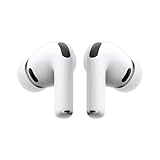
The Premium Tier — Galaxy Buds 4 Pro vs. The Audio Elite
Overview: Samsung does not exist in a vacuum. In this flagship shootout, we remove the Galaxy Buds 4 Pro from the Samsung ecosystem and pit them against the titans of 2026: the Apple AirPods Pro 3, the Sony WF-1000XM6, and the Bose QuietComfort Ultra. We analyze codec versatility, raw low-frequency attenuation, and microphone artifacting.
Key Topics Explored:
- Audio Fidelity: Samsung Seamless Codec vs. Sony's universally adopted LDAC.
- The Silence Test: Can Samsung's Adaptive ANC 2.0 dethrone Bose's class-leading phase-inversion algorithms?
- Call Quality: Pitting Samsung's 16kHz SWB hardware against Apple's H2 computational audio.
- Ecosystem Lock-in: The reality of using Galaxy Buds on Windows/iOS versus multipoint alternatives.
Galaxy Buds 4 as AI Earbuds — Tips, Tricks, and Galaxy AI
Overview: True wireless earbuds lack the thermal overhead to run native AI models. This post explains the data pipeline between the Galaxy Buds 4 Pro and the Galaxy S26’s Snapdragon/Exynos NPU. We explored optimizing software settings, managing latencies, and turning the earbuds into a frictionless portal to AI agents.
Key Topics Explored:
- Real-Time Interpreter: How to manage latency and optimize the 22-language translation feature in face-to-face environments.
- Hardware Accelerometers: Setting up and adjusting the sensitivity of the IMU-based “Nod/Shake” head gestures to avoid false-positive call pickups.
- Hands-Free AI: Bypassing physical stems to seamlessly summon Gemini via the bone-conduction VPU.
- Audiophile Tuning: A guide to mastering the 9-band parametric EQ in One UI 8.0 to rein in mid-bass bleed.
The Right Fit — User Personas & Recommendations
Overview: Audio hardware is ultimately subjective and must conform to the physical realities of your daily routine. In our concluding article, we match the technical specifications of the Galaxy Buds 4 series to specific lifestyles (personas), offering definitive purchasing verdicts for various use cases.
Key Topics Explored:
- The Commuter: Why the low-frequency attenuation of the Pro model is mandatory for public transit.
- The Athlete: How the redistributed center-of-gravity and IP57 rating replace the need for silicone wing-tips.
- The Office and Remote Worker: Evaluating the 16kHz microphone array for Zoom, alongside the limitations of Samsung's auto-switch protocol.
- The Casual Listener: Why the standard, open-fit Buds 4 ($179) might actually be the superior choice for mitigating ear-canal fatigue during 6-hour+ listening sessions.
![Samsung Galaxy Buds 4 Pro (2026) AI True Wireless Bluetooth Earbuds + $30 Gift Card, Hi-Res Audio, 2-Way Speaker, ANC 2.0, Optimized Comfort, IP57, Live Translation, Black [US Version, 2 Yr Warranty]](https://headphoneguidepro.com/wp-content/plugins/aawp/assets/img/placeholder-large.jpg)
- BUNDLE: Prime members get an Amazon Gift Card when you order Samsung Galaxy Buds4 Pro. Select the gift card bundle variation for redemption. Gift card may ship separately.
- EXCEPTIONAL AUDIO: Catch details like never before. Designed with a High-Res Audio¹ 24-bit hi-fi codec, the latest Galaxy earbuds maintain the integrity of your favorite audio over Bluetooth.
- TWO-WAY SPEAKER: Enjoy every audio experience to the fullest with two speakers in both Buds, including a tweeter for rich highs and a woofer for deep, full lows.
- HD VOICE: Enjoy clear phone calls with Galaxy Buds4 Pro and Galaxy S26 Series² —they work together to deliver crisp and clear conversations.
- ANC 2.0: Wherever you go, Adaptive Active Noise Cancellation 2.0³ intelligently adapts in real time to provide stronger, smoother noise cancellation wherever you go.
Bookmark this guide. As Samsung releases firmware updates, rollouts room-mapping spatial audio via Bluetooth 6.1, and pushes new AI features to the S26 series, we will update these guides to reflect the evolving capabilities of the hardware.
You may check Headphone 101 for detailed explanations of headphone technologies and terms.
For Bluetooth headphone guides, please check the Bluetooth headphones section.
The sports headphones section is dedicated to guides on sports headphones.
You may also reach us through our Facebook page.


Leave a Reply