
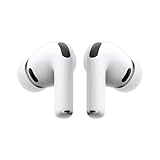
Apple claims the new in-ear optical heart rate sensor on the AirPods Pro 3 delivers “clinical-grade” accuracy (Jabra did not make this claim). In the world of sports science, that is a bold assertion.
Wrist-based wearables have historically struggled to match the gold standard of biometric tracking: the electrocardiogram (ECG) chest strap.
To separate marketing from empirical data, we subjected the AirPods Pro 3 to a rigorous 3-phase cardiovascular protocol so that we can evaluate the accuracy of AirPods Pro 3 heart rate sensor.
Test setup
Our benchmark (HR_{chest}) was the Polar H10 chest strap, measuring the electrical impulses of the heart directly in BPM (beats per minute). Our test devices were the AirPods Pro 3 (HR_{ear}) and an Apple Watch Ultra 2 (HR_{wrist}).
We calculated the Mean Absolute Error (MAE) for both devices against the baseline across different modalities using the formula:
MAE=\frac{1}{n}\sum_{i=1}^{n}|HR_{test}-HR_{chest}|Here is what the data actually reveals about in-ear biometrics for the following 3 types of workout:
- Steady-state cardio (running).
- High-Intensity Interval Training (HIIT).
- Strength Training.
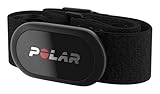
- WORKS WITH EVERYTHING: Polar HRM works with ALL HRM compatible Equipment.
- SUPREME ACCURACY: Widely recognized for its top precision by many sources, Polar H10 is the most accurate heart rate sensor in Polar's history. Polar H10 provides top quality measurement.
- CONNECTIVITY: Bluetooth, ANT plus and 5 kHz provide an excellent variety of connection options. You can use Bluetooth and ANT plus connections simultaneously as well as two Bluetooth connections simultaneously.
- POLAR PRO CHEST STRAP: With improved electrodes, an easy-to-use buckle and silicone dots, the strap is comfortable and interference-free.
- VERSATILITY: Polar H10 is fully waterproof and it has internal memory for multiple hours.

AirPods Pro 3 Heart Rate Monitor Accuracy Test (Phase 1): Steady-State Cardio (Running at 160 SPM)
In our first test, the subject ran on a treadmill at a constant pace with a cadence of 160 steps per minute (SPM) for 30 minutes.
The primary challenge for any optical sensor (PPG) while running is “cadence lock” (aka “signal crossover” and “crossover effect”). The physical shock of the foot striking the belt sends a vibrational wave through the body. If the software cannot filter this out, it will mistake the physical bounce for a heartbeat, artificially locking your reported heart rate to your running cadence.
Apple handles this by using the AirPods' onboard accelerometer to measure the mechanical shock vector and computationally subtract it from the optical signal.
The Results:
- AirPods Pro 3 MAE: 1.8 BPM
- Apple Watch MAE: 2.1 BPM
During steady-state cardio, the AirPods Pro 3 are functionally identical to a chest strap. The adaptive filtering algorithm completely neutralizes the footstrike artifact, providing an incredibly smooth and accurate curve.
AirPods Pro 3 Heart Rate Sensor Accuracy Test (Phase 2): High-Intensity Interval Training (HIIT)
Optical sensors do not measure the heart directly; they measure the volume of blood expanding in the capillaries. This creates an inherent physiological lag. When your heart suddenly spikes from 110 BPM to 170 BPM during a sprint interval, it takes a few seconds for that increased pressure wave to reach your extremities.
We tested 30-second all-out sprint intervals (HIIT)followed by 60 seconds of rest.
The Results:
- AirPods Pro 3 Latency: \approx 3.5\text{ seconds}
- Apple Watch Latency: \approx 4.2\text{ seconds}
- AirPods Pro 3 MAE: 4.5\text{ BPM}(elevated due to the temporal phase shift)
Because the ear is closer to the heart than the wrist, and supplied by the massive carotid artery, the AirPods Pro 3 detected the heart rate spikes slightly faster than the Apple Watch. However, neither optical device can match the instant electrical response of the Polar H10 chest strap.
AirPods Pro 3 Heart Rate Monitor Accuracy Test (Phase 3): The Strength Training
This is where wrist-based wearables traditionally fail. During heavy deadlifts or bench presses, the severe wrist flexion and gripping force restrict blood flow to the hand and physically push the watch away from the skin.
The Results:
- AirPods Pro 3 MAE: 2.3\text{ BPM}
- Apple Watch MAE: 11.4\text{ BPM}
The data here is definitive. The Apple Watch suffered massive data dropouts and wild inaccuracies due to forearm muscle contraction. The AirPods Pro 3, secured safely in the cartilage of the ear, remained completely unbothered by gripping forces.
For weightlifters and functional fitness athletes, the ear canal provides a far more stable sensor platform than the wrist.
![Apple Watch Series 11 [GPS 42mm] Smartwatch with Rose Gold Aluminum Case with Light Blush Sport Band - S/M. Sleep Score, Fitness Tracker, Health Monitoring, Always-On Display, Water Resistant](https://m.media-amazon.com/images/I/31J+F-pXaWL._SL160_.jpg)
The Verdict
Are the AirPods Pro 3 accurate enough to replace a chest strap?
If you are an elite track sprinter doing micro-intervals where every second of HR data matters, stick to the Polar H10; the physiological lag of optical tracking still exists.
However, for steady-state runners, cyclists, and especially strength trainers, the AirPods Pro 3 aren't just accurate—they reliably outperform wrist-based smartwatches, and you can ditch your watch (with AirPods Pro 3) for fitness tracking.
By moving the sensor away from the muscular turbulence of the forearm and into the highly perfused, static environment of the ear, Apple has created one of the most reliable optical fitness trackers on the market (and with incredible audio quality as well).
Please let us know your questions or thoughts about AirPods Pro 3 heart rate monitor accuracy in the comment box below.
This is part of the AirPods Pro 3 guide series. This series begins with a Long-Term Review covering ANC and battery life, followed by a deep dive into computational audio in our audiophile comparison. We also put the new biometrics to the test with a phone-only workout guide and a rigorousheart-rate accuracy test against clinical-grade chest straps.
To help you maximize your hardware, we uncover 4 hidden features of AirPods Pro 3 like edge-based translation, configure the ultimate student setup for campus life, and optimize beamforming mics for commuting and open offices. Finally, we explain the exact material-science protocols needed in our AirPods Pro 3 cleaning and maintenance guide.
You may check Headphone 101 for detailed explanations of headphone technologies and terms.
For Bluetooth headphone guides, please check the Bluetooth headphones section.
The sports headphones section is dedicated to guides on sports headphones.
You may also reach us through our Facebook page.


Leave a Reply