
In the binary world of consumer electronics, the choice between the Sony WF-1000XM6 (released February 2026) and Apple AirPods Pro 3 (released September 2025) is rarely made in a vacuum. It is usually predetermined by the phone in your pocket.
However, for the high-fidelity enthusiast, the “ecosystem” argument is insufficient. We need to understand the signal chain. Does the convenience of the Apple H2 chip outweigh the raw bitrate of Sony’s LDAC protocol? Does the new 32-bit architecture of the Sony QN3e processor outperform the computational audio algorithms of Apple’s Adaptive Audio 2.0?
This Sony WF-1000XM6 vs. AirPods Pro 3 comparison strips away the marketing of “magic” and “immersion” to examine the engineering philosophies defining the two best noise-cancelling earbuds of 2026.
1. The Silicon: Apple H2 vs. Sony V2+QN3e
The battle for audio supremacy is no longer fought solely with magnets and diaphragms; it is fought with silicon. Let's dive into this for WF-1000XM6 vs. AirPods Pro 3.
The Apple H2: Context is King
The Apple H2 headphone chip is a marvel of efficiency. Its primary architectural goal is latency reduction and contextual awareness.
- Neural Engine: The H2 features a dedicated neural engine that processes environmental data at a rate of 48,000 times per second. This allows for “Adaptive Audio 2.0,” which dynamically blends Transparency and ANC based on your GPS location and routine.
- The Philosophy: Apple believes the user should never have to touch a setting. The H2 aggressively applies equal-loudness contours (an evolution of the Fletcher-Munson curve) to ensure bass is perceived correctly at low volumes. It is “computational audio” in its purest form—the signal is constantly being manipulated to sound “pleasant.”
The Sony V2 + QN3e: Fidelity is King
The Sony WF-1000XM6 uses a dual-chip stack: the Integrated Processor V2 for telemetry and the HD Noise Cancelling Processor QN3e for audio.
- 32-Bit Float: As discussed in our previous review, the QN3e operates on a 32-bit floating-point architecture. This provides massive headroom for DSP operations without truncating the dynamic range.
- The Philosophy: Sony believes in “Source Fidelity.” While they offer features like DSEE Extreme (upscaling), the core pipeline is designed to be as linear as possible. The QN3e focuses on lowering the noise floor (THD+N) to allow the physical driver to do the work, rather than relying on psychoacoustic tricks.
Verdict: The H2 is smarter; the QN3e is cleaner.
2. The Wireless Bottleneck: AAC vs. LDAC
This is the single most critical section for the audiophile. Despite rumors of “Bluetooth 6.0” or proprietary codecs, the iPhone 17 (and its predecessors) remains stubbornly attached to the AAC codec for Bluetooth transmission.
The Math of Loss: WF-1000XM6 vs. AirPods Pro 3
- AirPods Pro 3 (on iPhone): Uses the AAC (Advanced Audio Coding) codec. The bitrate caps out around 256kbps. Even if you stream Apple Music Lossless (1141kbps), the Bluetooth pipe compresses it down to 256kbps lossy.
- Apple does support a proprietary lossless protocol (20-bit/48kHz), but it remains exclusive to the Apple Vision Pro. For 99% of users listening on a phone, you are listening to a lossy stream.
- Sony WF-1000XM6 (on Android): Uses LDAC. This codec dynamically adjusts bitrate based on RF environment, peaking at 990kbps with a sampling depth of 24-bit/96kHz. It is the best Bluetooth codec (even better than Samsung Seamless Codec in Galaxy Buds 4 Pro).
- The Difference: 990kbps (LDAC) vs. 256kbps (AAC).
While AAC is psychoacoustically efficient, it struggles with high-frequency complexity (cymbals, reverb tails) and sub-bass texture. Sony’s LDAC preserves roughly 3x the data. If you are a Tidal or Qobuz subscriber, the WF-1000XM6 is the only logical choice to utilize that subscription.
Winner: Sony WF-1000XM6 (by a massive margin).


3. Acoustic Architecture: Venting vs. Isolation
The physical design of the earbuds dictates the passive isolation and the soundstage.
AirPods Pro 3: The “Open” Closed-Back
Apple’s “Multiport Acoustic Architecture” is designed to eliminate the occlusion effect (that “stuffed ear” feeling).
- Venting: The H2 chip actively manages a system of vents to equalize pressure between the ear canal and the outside world.
- Result: The AirPods Pro 3 have the most natural soundstage of any in-ear monitor (IEM). It feels airy and wide, almost like an open-back headphone. Owners who need to wear the earbuds for extended periods, e.g., university students and 9-to-5 office workers, will especially appreciate this advantage. However, this venting compromises the deepest sub-bass impact (<40Hz), which Apple compensates for with DSP boosting.
Sony WF-1000XM6: The Sealed Chamber
Sony prioritizes isolation. The Dynamic Driver X Gen 2 is housed in a more sealed acoustic chamber.
- Isolation: The new matte chassis and polyurethane tips create a vacuum-like seal.
- Result: The bass response is visceral. The physical impact of a kick drum is felt in the jaw, not just heard. The soundstage is more intimate—inside your head rather than around it—but the separation of instruments is surgical thanks to the rigid carbon-composite dome.
Verdict: AirPods for classical/jazz (soundstage); Sony for electronic/rock/hip-hop (impact).
4. Sony WF-1000XM6 vs. AirPods Pro 3 Active Noise Cancellation (ANC)
When the AirPods Pro 3 launched in September 2025, they claimed “2x better ANC” than the AirPods Pro 2. They held the crown for five months.
The High-Frequency Battle
Both units effectively delete low-frequency drone (airplane engines). The difference lies in the mid-to-high frequencies (human speech, typing, coffee shop grinder).
- AirPods Pro 3: Relies on the H2 chip’s speed to predict noise. It is excellent, but because of the venting system mentioned above, some high-frequency noise physically bleeds through.
- Sony WF-1000XM6: The addition of the third feedback microphone inside the nozzle gives Sony the edge. Because the earbud is physically sealed tighter, and the QN3e has sub-millisecond latency, the XM6 creates a “blacker” background.
Test Scenario (Busy Cafe):
- AirPods Pro 3: The chatter is reduced to a whisper, but you can still hear the transient “clack” of plates.
- Sony WF-1000XM6: The chatter is gone. The plates are muffled thuds. It is isolating to the point of being disorienting for some.
5. Transparency Mode: The Uncanny Valley
Here, Apple remains undefeated.
The AirPods Pro 3 Transparency mode is virtually indistinguishable from reality. The H2 chip processes external sound with such low latency that your brain cannot perceive the delay. It allows you to hold a conversation without removing the buds, and your own voice sounds natural (no occlusion).
The WF-1000XM6 has improved Transparency compared to the XM5, reducing the “hiss” of the microphones. However, it still sounds like amplified hearing. You can tell you are listening through a microphone. Directionality is decent, but not “invisible” like Apple.
6. The “Smart” Layer: Health vs. Assistants
In 2026, earbuds are wearables, not just speakers.
AirPods Pro 3: A Health Monitor.
- Heart Rate Sensors: Integrated into the stem, allowing for workout tracking without a watch. It is actually comparable to a chest strap in terms of accuracy for most workouts.
- Hearing Health: Functions as a clinical-grade over-the-counter (OTC) hearing aid.
- Core Feature: Seamless switching between iPhone, iPad, and Mac. It is magic, provided you own all three.
Sony WF-1000XM6: An AI Assistant.
- Gemini Live: The native integration allows for multi-turn conversations with Google’s Gemini model. The bone-conduction mics make this viable even on a windy street.
- Multipoint: Connects to any two devices (Windows + Android, iPhone + Mac).
- Speak-to-Chat: Automatically pauses audio when you speak. It is also available on Sony WH-1000XM6/XM5/XM4 and Samsung Galaxy Buds 3. A feature Apple still hasn't copied, though “Conversation Awareness” is similar.
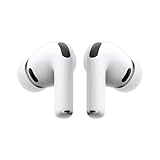

7. The Verdict: Choose Your Prison (WF-1000XM6 vs. AirPods 3 Pro)
The comparison between the Sony WF-1000XM6 vs. AirPods Pro 3 is a choice between a beautifully furnished cell and a wide-open field.
The Case for AirPods Pro 3 ($249)
If you own an iPhone 17, an iPad, and a MacBook, the AirPods Pro 3 are the correct choice. The ecosystem friction is zero. The Transparency mode is a safety feature for urban living, and the sound quality is “great” for 99% of the population. They are the best lifestyle earbuds.
The Case for Sony WF-1000XM6 ($329)
If you care about what the artist intended, you buy the Sony.
- The Bitrate: LDAC offers a quantifiable, mathematical advantage in data transmission.
- The Silence: The ANC is stronger, specifically in the vocal range.
- The Freedom: The Sony Connect app offers a 10-band parametric EQ that saves to the buds. You can tune them once and they will sound that way on your phone, your laptop, or your TV.
Final Score:
- Sound Quality: Sony (9.5/10) > Apple (8.5/10)
- ANC: Sony (9.5/10) > Apple (9/10)
- Comfort/Transparency: Apple (10/10) > Sony (8.5/10)
- Value: Apple ($249) > Sony ($329)
For the reader of this blog—the person who checks specs, understands bitrates, and likely subscribes to a Hi-Res streaming tier—the Sony WF-1000XM6 is the superior piece of audio engineering.
If you have any questions about AirPods Pro 3 vs. WF-1000XM6, please let us know in the comment box below.
This article is part of our comprehensive Sony WF-1000XM6 Guide Series. Because Sony’s 2026 flagship earbuds introduce so many new architectural changes—from the 32-bit QN3e processor to the new high-friction matte chassis—we broke our testing down into six dedicated deep dives. If you are weighing your options against the competition, be sure to read our AirPods Pro 3 Showdownfor ecosystem comparisons or our Bose QC Ultra Gen 2 Battlefor pure noise cancellation testing. Existing Sony users should check out our XM6 vs. XM5 Upgrade Guide, while remote workers and audiophiles can explore our dedicated Call Quality Test and LDAC Audio Analysis. For a complete overview of all our findings and our final verdict, head over to The Ultimate Guide to the Sony WF-1000XM6, which serves as the central navigation hub for this entire series.
You may check Headphone 101 for detailed explanations of headphone technologies and terms.
For Bluetooth headphone guides, please check the Bluetooth headphones section.
The sports headphones section is dedicated to guides on sports headphones.
You may also reach us through our Facebook page.


Leave a Reply