• Skip to content
  • Skip to primary sidebar
  • Home
  • Headphone 101
  • Sports
  • Galaxy Buds
  • AirPods
  • Sony

Headphone Guide Pro

  • Home
    • About
    • Contact
  • Headphone 101
    • Bluetooth LE Audio and the LC3 Codec: A Technical Deep Dive
    • The Physics and Engineering of Super Wide Band (SWB) Voice
    • True Wireless Stereo (TWS) Explained
    • What is active noise canceling (ANC)? How active noise-cancelling headphones work?
    • Bluetooth Codec for Wireless Headphones and Earbuds: Everything You Need to Know
      • Unleashing the Power of LDAC Codec: How to Enable Hi-Res Audio on Android Devices with WF-1000XM4, WF1000-XM5, WF-1000XM6, and WH-1000 series?
      • What is Samsung Seamless Codec? 4 things you should know about this new codec
      • What are the differences among in-ear, on-ear and over-ear headphones?
  • Sports
    • A Complete Guide for Jabra Elite Sport
  • Galaxy Buds
    • The Complete Technical Guide to the Galaxy Buds 4 & Buds 4 Pro
      • The Evolution — What’s New in Galaxy Buds 4 and Galaxy Buds 4 Pro?
      • Galaxy Buds 4 as an AI Earbud — Tips, Tricks, and Galaxy AI
      • The Right Fit of Galaxy Buds 4 — User Personas & Recommendations
      • Head-to-Head — Galaxy Buds 4 vs. Buds 4 Pro
      • The Flagship Face-off: Galaxy Buds 4 Pro vs. AirPods Pro 3, Sony WF-1000XM6, and Bose QC Ultra Earbuds II
    • Top 10 new features of Galaxy Buds 3 and Galaxy Buds 3 Pro
      • Galaxy Buds 3 vs Galaxy Buds 3 Pro: What are the differences?
    • History of Galaxy Buds
    • What is Samsung Seamless Codec? 4 things you should know about this new codec
    • How to use widgets to check battery levels and control Galaxy Buds 2, Galaxy Buds Pro, Galaxy Buds Live, Galaxy Buds+, and Galaxy Buds?
    • Galaxy Buds 2 vs Galaxy Buds Pro: the Top 8 Pros and Cons
    • Samsung Galaxy Buds Live vs Samsung Galaxy Buds Plus vs Apple AirPods Pro
      • Layout of Galaxy Buds Live
      • How to charge Galaxy Buds Live battery?
      • How to use touch control on Galaxy Buds Live?
      • 4 ways to check Galaxy Buds Live battery level
      • How to manage Galaxy Buds Live in Galaxy Wearable App?
      • Galaxy Buds Pro vs Galaxy Buds Live: what’s new in Galaxy Buds Pro?
    • How to use Samsung Galaxy Buds and Galaxy Buds+?
      • 5 best new features and improvements of Galaxy Buds Plus (Galaxy Buds+ vs Galaxy Buds)
  • AirPods
    • AirPods Pro 3: The Complete Technical Guide and Long-Term Review
      • 6 Months Later: The Technical Reality of the AirPods Pro 3
      • AirPods Pro 3 vs. Audiophile Earbuds: Does Apple Finally Compete?
      • Beyond Audio: The Hidden Features of the AirPods Pro 3
      • The Ultimate Student Setup: Maximizing AirPods Pro 3 for Focus and Study
      • Surviving the 9-to-5: AirPods Pro 3 for Commuting and Open Offices
      • Ditch the Watch: How to Track Workouts Using Only Your AirPods Pro 3
      • AirPods Pro 3 Heart Rate Monitor Accuracy: Tested Against a Chest Strap
      • How to Clean and Maintain the New Foam-Infused AirPods Pro 3 Tips? A Complete AirPods Pro 3 Maintenance Guide
    • New Features for AirPods Pro in iOS 17
    • AirPods Pro 2 New features explained
    • How to Use and Adjust Force Sensor on AirPods Pro like a Pro?
    • AirPods 3 vs AirPods 2: Top 8 improvements and new features of AirPods 3
    • AirPods 3 vs AirPods Pro: which one should you choose?
    • Top 10 new features of AirPods Pro (vs AirPods 2)
  • Sony
    • Unleashing the Power of LDAC Codec: How to Enable Hi-Res Audio on Android Devices with WF-1000XM4, WF1000-XM5, WF-1000XM6, and WH-1000 series?
    • Sony WH-1000XM6: the Definitive Guide
    • The Ultimate Guide to the Sony WF-1000XM6: Everything You Need to Know
      • Sony WF-1000XM6 Review: The King Returns (And It’s Finally Matte)
      • Sony WF-1000XM6 vs. WF-1000XM5: Evolution or Revolution? A Technical Deep Dive
      • Are the WF-1000XM6 High-Fidelity? Testing LDAC & 32-Bit Processing
      • Can You Take a Meeting in a Coffee Shop? Sony WF-1000XM6 Microphone & AI Test (Call Quality)
      • Sony WF-1000XM6 vs. AirPods Pro 3: The Architecture of Ecosystems
      • Sony WF-1000XM6 vs. Bose QC Ultra Earbuds Gen 2: The Battle for Silence

Can You Take a Meeting in a Coffee Shop? Sony WF-1000XM6 Microphone & AI Test (Call Quality)

Bluetooth headphones, noise cancelling headphones, Sony 1000X, wireless earbuds

Sony WF-1000XM6 Microphone & AI Test (Call Quality test)

For the modern professional, the “Work From Anywhere” dream usually dies the moment a barista starts grinding beans during a client presentation. Call quality matters.

Historically, the Sony 1000X series prioritized the listener's silence over the caller's clarity. The WF-1000XM4s were notorious for amplifying background noise to the person on the other end of the line. The WF-1000XM5 improved this with bone conduction, but the algorithm was aggressive and robotic.

With the Sony WF-1000XM6, Sony claims to have solved the “coffee shop call quality problem” using a new Precise Voice Pickup Technology powered by the V2 Processor’s Neural Processing Unit (NPU).

In this Sony WF-1000XM6 call quality review, we analyze the sensor fusion and AI architecture to determine if these are the best earbuds for Zoom calls in 2026.

1. The Hardware: MEMS and Bone Conduction V2 to Imporve Quality Quality of WF-1000XM6

The clarity of a call begins with the physical signal-to-noise ratio (SNR) of the capture hardware.

High-SNR MEMS Microphones

The WF-1000XM6 utilizes three MEMS (Micro-Electro-Mechanical Systems) microphones specifically for voice capture per earbud. Unlike standard condenser mics, these are sealed in a newly designed Wind Noise Reduction Structure.

  • The Mesh: A hydrophobic mesh cover disrupts laminar airflow, preventing wind shear from hitting the diaphragm directly.
  • The Cavity: The mic is recessed 2mm deeper into the shell than on the WF-1000XM5, creating a “dead zone” for wind turbulence.

Bone Conduction V2: The Truth Serum

The secret weapon is the Bone Conduction Sensor in WF-1000XM6. It is an accelerometer that rests against the concha of your ear. Do not confuse it with the voice pickup unit in Galaxy Buds.

  • The Physics: When you speak, your skull vibrates. When a car drives by, your skull does not vibrate.
  • The Logic: The sensor detects these low-frequency vibrations (<500Hz) and creates a “gate.” If the MEMS mics hear sound (a dog barking) but the bone sensor detects zero vibration, the processor knows that the sound is not yours. It immediately attenuates the signal to near zero.
Sony WF-1000XM6 The Best Truly Wireless Noise Cancelling Earbuds (2026 Model), Bluetooth in-Ear Headphones, with Studio-Quality Sound, Up to 24 Hours of Battery Life, Platinum Silver
Apple AirPods Pro 3 Wireless Earbuds, Active Noise Cancellation, Live Translation, Heart Rate Sensing, Hearing Aid Feature, Bluetooth Headphones, Spatial Audio, High-Fidelity Sound, USB-C Charging
Sony WF-1000XM6 The Best Truly Wireless Noise Cancelling Earbuds (2026 Model), Bluetooth in-Ear Headphones, with Studio-Quality Sound, Up to 24 Hours of Battery Life, Platinum Silver
Apple AirPods Pro 3 Wireless Earbuds, Active Noise Cancellation, Live Translation, Heart Rate Sensing, Hearing Aid Feature, Bluetooth Headphones, Spatial Audio, High-Fidelity Sound, USB-C Charging
Amazon Prime
-
$328.00
Price not available
-
-
Buy
… Read the rest
Are the WF-1000XM6 High-Fidelity? Testing LDAC & 32-Bit Processing

Bluetooth headphones, noise cancelling headphones, Sony 1000X, wireless earbuds

Are the WF-1000XM6 High-Fidelity? Testing LDAC & 32-Bit Processing. HiFi earbuds

For the audiophile community, “wireless high-fidelity” has always been an oxymoron. Bluetooth is, by definition, a lossy compression pipeline. However, the Sony WF-1000XM6 is making a compelling argument that we have reached the point of diminishing returns where wireless convenience might finally outweigh wired purity.

With the new 32-bit precision QN3e DAC and the maturation of LDAC, the XM6 is not just a noise-cancelling tool; it is a serious piece of audio gear.

In this Sony WF-1000XM6 sound quality review in the world of HiFi earbuds, we bypass the “bass boost” talk to analyze the signal chain, the bit-depth headroom, and the efficacy of DSEE Extreme upscaling.

1. The Signal Chain: 32-Bit Floating Point

Most consumer audio gear operates on a 16-bit or 24-bit fixed-point architecture. The Integrated Processor V2 combined with the QN3e introduces a 32-bit floating-point signal path.

Why Float Matters

In digital audio, “clipping” occurs when a signal exceeds 0DBFS (Decibels Relative to Full Scale). In a fixed-point system (like 24-bit), if you boost a bass frequency by +6dB via EQ, and the track is already mastered near 0dB, you clip the signal. Digital distortion is introduced before the Digital-to-Analog Converter (DAC).

  • The WF-1000XM6 Advantage: 32-bit float has roughly 1500dB of dynamic range. It is mathematically impossible to clip the internal signal bus.
  • Practical Result: You can apply the “Bright” EQ preset (which boosts treble significantly) while listening to a loud, compressed pop track, and the cymbals will remain clean. There is no “crunch” or digital harshness.

2. LDAC: The 990kbps Pipeline

If you are using an iPhone, you are limited to AAC (250kbps, even for AirPods Pro 3). To unlock the 990kbps pipeline on WF-1000XM6, you need an Android device or a specialized DAP (Digital Audio Player) that supports LDAC.

The Bandwidth Math

Standard Bluetooth (SBC) transmits at ~328kbps.

Qualcomm aptX HD transmits at ~576kbps.

Sony LDAC transmits at ~990kbps.

While CD-quality (16-bit/44.1kHz) requires 1411 kbps (see the calculation here) for uncompressed transmission, LDAC gets us closer than any other Bluetooth codec.

  • The Frequency Cutoff: In our spectrum analysis, AAC cuts off hard at 16kHz. LDAC extends to 40kHz (though human hearing stops at 20kHz, this ultrasonic extension prevents aliasing artifacts in the audible band).
  • The Transient Response: The higher bitrate allows for faster data packet delivery during complex passages (e.g., a chaotic
… Read the rest
Sony WF-1000XM6 vs. Bose QC Ultra Earbuds Gen 2: The Battle for Silence

Bluetooth headphones, Headphone 101, noise cancelling headphones, Sony 1000X, wireless earbuds

Sony WF-1000XM6 vs. Bose QC Ultra Earbuds Gen 2: The Battle for Silence

If the AirPods Pro are the lifestyle choice, the battle between Sony and Bose is the heavyweight title fight for pure engineering dominance.

For years, the narrative was simple: Bose had the best Active Noise Cancellation (ANC), and Sony had the best sound quality. With the release of the Bose QuietComfort Ultra Earbuds Gen 2 in June 2025, Bose narrowed the sound quality gap significantly. Now, with the Sony WF-1000XM6, Sony is attempting to steal the ANC crown.

This Sony WF-1000XM6 vs. Bose QC Ultra Gen 2 comparison is not about features or apps; it is about the decibel reduction curve. We are looking at who creates the purest void.

1. The ANC Architecture: CustomTune vs. QN3e (Sony WF-1000XM6 vs. Bose QC Ultra Earbuds Gen 2)

The approach to silence is fundamentally different between Framingham (Bose) and Tokyo (Sony). Here is the comparison of the approaches for Sony WF-1000XM6 vs. Bose QC Ultra Earbuds Gen 2.

Bose QC Ultra Earbuds Gen 2: The “Vacuum” Effect

The Bose QC Ultra Gen 2 utilizes an aggressive proprietary algorithm called CustomTune.

  • The Chime: When you insert the buds, that sweeping tone isn't just a startup sound; it's a sonar ping. The mic measures the acoustic response of your specific ear canal and calibrates the anti-noise filter instantly.
  • The Result: Bose achieves a terrifyingly high level of attenuation in the sub-bass frequencies (20~200Hz). It creates a physical sensation of pressure—a “vacuum” effect—that completely erases the drone of an airplane engine. It is effective, but for some users, it can be nauseating (the “eardrum suck” phenomenon).

Sony WF-1000XM6: The Natural Void

The Sony WF-1000XM6 relies on the sheer processing power of the QN3e chip and the new 8-microphone array.

  • The Strategy: Rather than a brute-force vacuum, Sony targets specific frequencies with higher precision. The new 32-bit processor allows for more complex notch filters in the mid-range.
  • The Result: Sony’s silence feels “lighter.” You don't feel the pressure change as intensely. While Bose might reduce a jet engine by 45 dB, Sony might hit 43dB —technically less, but practically indistinguishable.

The Edge:

  • Deep Rumble (Planes/Trains): Bose wins. The floor drops out completely.
  • Mid-Range (Voices/Office): Sony wins. The extra feedback microphones in the XM6 handle erratic human speech better than Bose’s algorithm, which prefers constant drones.
Sale
Bose QuietComfort Ultra Earbuds (2nd Gen) - Wireless Noise Cancelling Earbuds with Mic, Immersive Audio, USB-C Charging, Up to 6 Hours Battery, IPX4 Rating, Black
Bose QuietComfort Ultra Earbuds (2nd Gen) – Wireless Noise Cancelling Earbuds with Mic, Immersive
… Read the rest

The Evolution — What’s New in Galaxy Buds 4 and Galaxy Buds 4 Pro?

Bluetooth headphones, noise cancelling headphones, Samsung Galaxy Buds

What’s New in Galaxy Buds 4 and Galaxy Buds 4 Pro?

The true wireless stereo (TWS) earbuds market has arguably been stagnating for the past two product cycles. Iterative driver tweaks and software-gated features have largely replaced genuine hardware innovation. However, with the Galaxy Unpacked event in February 2026, Samsung signaled a definitive shift. Launched alongside the new flagship smartphones, Galaxy Buds 4 and Galaxy Buds 4 Pro are positioned not just as peripherals but as the premier Galaxy S26 ecosystem accessories.

With the Samsung Galaxy Buds 4 release date officially slated for March 11, 2026, audiophiles and tech enthusiasts finally have their hands on the spec sheets. The new lineup—consisting of the $179 open-fit Galaxy Buds 4 and the $249 canal-fit Galaxy Buds 4 Pro—represents a fundamental teardown and rebuild of Samsung’s acoustic and physical architecture.

In this deep-dive series on Galaxy Buds 4 and Galaxy Buds 4 Pro, we strip away the marketing gloss to examine the raw hardware changes, the acoustic engineering, and the highly debated ecosystem lock-ins that define this new generation.

Ergonomics and the Galaxy Buds 4 Blade Design

Samsung’s design language has historically been somewhat erratic, bouncing from the bean-shaped Galaxy Buds Live to the stemless Galaxy Buds Pro and Galaxy Buds 2 Pro, and recently to the angular, cyberpunk-esque triangular stems of the Galaxy Buds 3 and Galaxy Buds 3 Pro. For 2026, Samsung has pivoted again, but this time driven by empirical data rather than pure aesthetics.

The new Galaxy Buds 4 blade design is the result of computational modeling utilizing over 100 million global ear data points. The most notable physical change is the transition from a sharp, triangular stem to a flatter, metallic-finished “blade.”

From a purely functional standpoint, this is a massive ergonomic upgrade. The flat surface provides a significantly wider and more tactile area for the integrated force sensors (similar to that on AirPods) . If you found the pinch-and-swipe gestures on previous iterations to be finicky or prone to misfires when walking or running, the blade design mitigates this by offering a defined, engraved pinch-control area.

Weight distribution has also been meticulously tuned. The Galaxy Buds 4 Pro weighs in at exactly 5.1g per bud, while the standard Buds 4 sits at 4.6g. By slightly angling the nozzle and redistributing the battery mass higher into the concha, Samsung has reduced the pendulum effect that often plagues stemmed earbuds during high-impact movement.

However, it … Read the rest

AirPods Pro 3 vs. Audiophile Earbuds: Does Apple Finally Compete?

Bluetooth headphones, noise cancelling headphones, wireless earbuds

AirPods Pro 3 vs. Audiophile Earbuds

For years, the audiophile community has treated the AirPods line with a mix of begrudging respect for their convenience and outright dismissal of their sonic fidelity. The consensus was simple: if you wanted true high-fidelity wireless audio, you bought the Sony WF-1000XM6 or Sennheiser Momentum True Wireless. You wanted LDAC support, parametric EQ, and large dynamic drivers in audiophile earbuds.

With the release of the AirPods Pro 3, Apple has made a brazen attempt to court critical listeners. Featuring a redesigned “multiport acoustic architecture,” foam-infused ear tips, and a retuned DSP pipeline, the Pro 3 demands a re-evaluation.

But can computational audio finally bridge the gap created by compressed Bluetooth codecs? Let's analyze the acoustics, the silicon, and the math to see if Apple can truly compete in the audiophile earbuds arena.

1. The Codec Dilemma: AAC vs. LDAC vs. aptX for Audiophile Earbuds

Let's address the most glaring omission first: the AirPods Pro 3 still rely on theAAC (Advanced Audio Coding) codec over Bluetooth 5.3. There is no aptX Adaptive (as adopted by Bose QC Ultra EearBuds 2), and there is no LDAC support. Of course, Apple will probably never license Samsung Seamless Codec (which Galaxy Buds, e.g., Galaxy Buds 4, rely on)

For the spec-sheet purist, this is a dealbreaker. Sony's WF-1000XM6 utilizes LDAC, which dynamically scales up to 990kbps. The uncompressed bitrate of standard CD-quality audio (16-bit, 44.1kHz, stereo) is calculated as:

R=f_s\times N\times C

Where fsf_s is the sampling rate (44100Hz), N is the bit depth (16), and C is the number of channels (2). This yields exactly 1411.2kbps.

Sony's LDAC compresses this with minimal loss, delivering a highly detailed signal. Apple's AAC, however, caps out at around 256kbps. On paper, Apple is discarding roughly 80% of the data.

So how does the Pro 3 sound even remotely competitive? The answer lies in psychoacoustic masking. AAC is an incredibly efficient algorithm that prioritizes the frequencies human ears are most sensitive to (2kHz to 5kHz) while aggressively discarding data masked by louder adjacent frequencies. Furthermore, because Apple controls both the encoder (iOS) and the decoder (the H2 chip), they bypass the core audio framework conversions that degrade Bluetooth audio on Android devices.

While the Sony WF-1000XM6 undeniably retrieves more micro-detail in complex, treble-heavy orchestral tracks, the Pro 3 masks its bitrate limitations remarkably well through … Read the rest

Sony WF-1000XM6 vs. AirPods Pro 3: The Architecture of Ecosystems

Bluetooth headphones, noise cancelling headphones, Sony 1000X, wireless earbuds

Sony WF-1000XM6 vs. AirPods Pro 3

In the binary world of consumer electronics, the choice between the Sony WF-1000XM6 (released February 2026) and Apple AirPods Pro 3 (released September 2025) is rarely made in a vacuum. It is usually predetermined by the phone in your pocket.

However, for the high-fidelity enthusiast, the “ecosystem” argument is insufficient. We need to understand the signal chain. Does the convenience of the Apple H2 chip outweigh the raw bitrate of Sony’s LDAC protocol? Does the new 32-bit architecture of the Sony QN3e processor outperform the computational audio algorithms of Apple’s Adaptive Audio 2.0?

This Sony WF-1000XM6 vs. AirPods Pro 3 comparison strips away the marketing of “magic” and “immersion” to examine the engineering philosophies defining the two best noise-cancelling earbuds of 2026.

1. The Silicon: Apple H2 vs. Sony V2+QN3e

The battle for audio supremacy is no longer fought solely with magnets and diaphragms; it is fought with silicon. Let's dive into this for WF-1000XM6 vs. AirPods Pro 3.

The Apple H2: Context is King

The Apple H2 headphone chip is a marvel of efficiency. Its primary architectural goal is latency reduction and contextual awareness.

  • Neural Engine: The H2 features a dedicated neural engine that processes environmental data at a rate of 48,000 times per second. This allows for “Adaptive Audio 2.0,” which dynamically blends Transparency and ANC based on your GPS location and routine.
  • The Philosophy: Apple believes the user should never have to touch a setting. The H2 aggressively applies equal-loudness contours (an evolution of the Fletcher-Munson curve) to ensure bass is perceived correctly at low volumes. It is “computational audio” in its purest form—the signal is constantly being manipulated to sound “pleasant.”

The Sony V2 + QN3e: Fidelity is King

The Sony WF-1000XM6 uses a dual-chip stack: the Integrated Processor V2 for telemetry and the HD Noise Cancelling Processor QN3e for audio.

  • 32-Bit Float: As discussed in our previous review, the QN3e operates on a 32-bit floating-point architecture. This provides massive headroom for DSP operations without truncating the dynamic range.
  • The Philosophy: Sony believes in “Source Fidelity.” While they offer features like DSEE Extreme (upscaling), the core pipeline is designed to be as linear as possible. The QN3e focuses on lowering the noise floor (THD+N) to allow the physical driver to do the work, rather than relying on psychoacoustic tricks.

Verdict: The H2 is smarter; the QN3e is cleaner.

2. The

… Read the rest

Sony WF-1000XM6 vs. WF-1000XM5: Evolution or Revolution? A Technical Deep Dive

Bluetooth headphones, noise cancelling headphones, Sony 1000X, wireless earbuds

Sony WF-1000XM6 vs. WF-1000XM5: Evolution or Revolution? A Technical Deep Dive

The three-year gap between the release of the Sony WF-1000XM5 (July 2023) and the Sony WF-1000XM6 (February 2026) is an eternity in the personal audio cycle. In that window, the market saw the rise of the Bose QC Ultra Gen 2 and the computational dominance of Apple's H3 silicon.

For existing owners of the WF-1000XM5, the question is not about brand loyalty—it is about technical obsolescence. Does the new architecture of the WF-1000XM6 warrant a $330 reinvestment, or is the XM5 still competitive?

This Sony WF-1000XM6 vs. XM5 comparison goes beyond marketing bullet points to analyze the signal path, acoustic impedance, and noise-cancellation algorithms that set these two flagships apart.

If you are looking for Sony's flagship over-ear headphones, you may check WH-1000XM6.

1. WF-1000XM6 vs XM5: Chassis and Ergonomics

The most polarized aspect of the WF-1000XM5 was not its sound, but its shell. Sony’s decision to use a polished, glossy polymer for the XM5 resulted in a low coefficient of friction. While visually premium, this created two functional failures for a significant subset of users:

  1. Handling Difficulty: The buds were notoriously difficult to remove from the charging case with dry hands.
  2. Stability: The lack of surface texture meant the earbuds relied almost entirely on the expansion force of the polyurethane foam tips to stay in the ear canal. Once sweat was introduced, the friction was lost, leading to “creep” (the slow extrusion of the bud from the ear).

The XM6 Correction

The WF-1000XM6 rectifies this with a high-friction, soft-touch matte finish. This is likely a chemically etched polycarbonate, similar to the texture found on professional mirrorless camera bodies.

Functionally, this changes the retention mechanics. The matte texture engages with the skin of the concha (the bowl of the ear), creating a secondary point of stability. This allows users to potentially downsize their foam tips for comfort without sacrificing the seal required for ANC.

Volume and Center of Gravity

  • WF-1000XM5: approx. 5.9g per bud.
  • WF-1000XM6: approx. 5.2g per bud.

While the weight reduction is minimal (0.7g), the 11% reduction in volume is significant. More importantly, Sony has re-architected the internal PCB layout. By stacking the V2 and QN3e processors vertically, the center of gravity has been shifted inward by approximately 2mm. This reduces the cantilever moment—the leverage the earbud exerts on the ear canal when the head turns rapidly—making the XM6 significantly more stable for inertial movement (running, … Read the rest

6 Months Later: The Technical Reality of the AirPods Pro 3

Bluetooth headphones, Headphone 101, noise cancelling headphones, wireless earbuds

The Technical Reality of the AirPods Pro 3

When Apple launched the AirPods Pro 3 six months ago, the keynote was filled with the usual superlatives: “magical,” “revolutionary,” and claims of “2x better” Active Noise Cancellation (ANC). Now that the marketing dust has settled and we've put over 500 hours of real-world use into these earbuds, it's time to evaluate the engineering.

Are the acoustic and silicon upgrades in AirPods Pro 3 actually worth your money, or is this just an iterative update disguised by computational audio tricks?

Let's break down the hardware, the physics of the new ANC pipeline, the biometrics, and how the battery chemistry is holding up half a year later.

Some “hidden” features of AirPods Pro 3 are discussed here.

1. Material Science: The Foam-Infused Tips and Acoustic Impedance

The most significant physical change to the AirPods Pro 3 isn't the slightly reduced chassis volume; it's the shift from pure silicone ear tips to a foam-microsphere composite. Apple marketed this as a comfort feature, but its real purpose is acoustic impedance matching.

Pure silicone is highly compliant but struggles to create a perfect high-frequency seal in irregularly shaped ear canals. By injecting closed-cell memory foam microspheres into the silicone matrix, the tips now exhibit viscoelastic properties. They deform under body heat to fill micro-gaps, drastically improving passive noise isolation (PNI) before the digital signal processing (DSP) even kicks in. Interestingly, Song WF-1000XM6 also updated the tip material for better acoustics.

This improved seal lowers the resonance frequency of the ear canal and minimizes low-frequency acoustic leakage. The result is a flatter sub-bass response curve and less reliance on the internal feedback microphone to dynamically EQ the low-end via Apple's Adaptive EQ algorithm.

Please note that you need to pay extra attention when cleaning the new foam-infused tips, as explained in the AirPods Pro 3 maintenance guide.

Apple AirPods Pro 3 Wireless Earbuds, Active Noise Cancellation, Live Translation, Heart Rate Sensing, Hearing Aid Feature, Bluetooth Headphones, Spatial Audio, High-Fidelity Sound, USB-C Charging
Apple AirPods 4 Wireless Earbuds, Bluetooth Headphones, with Active Noise Cancellation, Adaptive, Transparency Mode, Personalized Spatial Audio, USB-C Charging Case, Wireless Charging, H2 Chip
Apple AirPods Pro 3 Wireless Earbuds, Active Noise Cancellation, Live Translation, Heart Rate Sensing, Hearing Aid Feature, Bluetooth Headphones, Spatial Audio, High-Fidelity Sound, USB-C Charging
Apple AirPods 4 Wireless Earbuds, Bluetooth Headphones, with Active Noise Cancellation, Adaptive, Transparency Mode, Personalized Spatial Audio, USB-C Charging Case, Wireless Charging, H2 Chip
-
Amazon Prime
Price not available
$148.99
-
-
Buy on Amazon
Buy on Amazon
Apple AirPods Pro 3 Wireless Earbuds, Active Noise Cancellation, Live Translation, Heart Rate Sensing, Hearing Aid Feature, Bluetooth Headphones, Spatial Audio, High-Fidelity Sound, USB-C Charging
-
Price not available
-
… Read the rest

Sony WF-1000XM6 Review: The King Returns (And It’s Finally Matte)

Bluetooth headphones, noise cancelling headphones, Sony 1000X, wireless earbuds

Sony WF-1000XM6 Review: The King Returns (And It’s Finally Matte)

When the WF-1000XM5 launched in 2023, they were a technical marvel wrapped in a divisive shell. The glossy finish was slippery, and the size reduction came at the cost of passive isolation stability for many users. Three years later, the Sony WF-1000XM6 has arrived to correct the course. This Sony WF-1000XM6 review will explore the improvements and new features.

Sony has not just iterated; they have fundamentally re-architected the signal path. With a new dual-processor stack, a shift to 32-bit processing, and a native integration of Google’s Gemini foundation models, the XM6 represents a significant leap in computational audio.

In this Sony WF-1000XM6 review, we are skipping the unboxing fluff to dissect the engineering changes that arguably make these the best noise-cancelling earbuds 2026 has to offer. Please note that WH-1000XM6, released last year, is an over-ear headphone; while WF-1000xm6 is a wireless earbud.

The Chassis: Friction Coefficients and Ergonomics

The most immediate correction Sony made is material. The XM5’s glossy coating is gone, replaced by a high-friction, soft-touch matte polymer.

This isn't just aesthetic; it’s functional. The texture increases the coefficient of friction against the concha, drastically improving stability without relying solely on the expansion force of the polyurethane foam tips.

Measurements confirm the chassis is 11% slimmer by volume compared to the XM5. Sony achieved this by redesigning the SiP (System in Package) layout, stacking the V2 and QN3e chips vertically rather than laterally. The center of gravity has shifted inward, closer to the ear canal, which reduces the cantilever effect that caused previous models to dislodge during vigorous movement.

The Silicon Stack: V2 + QN3e

The heart of the XM6 is the new dual-chip architecture. While the Integrated Processor V2 handles Bluetooth transmission and initial telemetry, the heavy lifting is done by the new HD Noise Cancelling Processor QN3e.

32-Bit Precision

The QN3e introduces a 32-bit audio signal path, up from the 24-bit processing in the XM5.

For the casual listener, this means nothing. For the audiophile, it means a significantly lower noise floor and higher headroom for DSP (Digital Signal Processing) calculations. When applying the 10-band EQ, the 32-bit float precision ensures that drastic frequency cuts or boosts do not introduce digital clipping or quantization artifacts before the signal hits the DAC (Digital-to-Analog Converter).

Latency and Throughput

Sony claims the QN3e is 3x faster than the previous … Read the rest

Sony WH-1000XM6: the Definitive Guide

Bluetooth headphones, Headphone 101, noise cancelling headphones

Sony WH-1000XM6: the Definitive Guide

The launch of the Sony WH-1000XM6 on May 15, 2025, represents more than a routine product update; it marks the emergence of the new king in the active noise-cancelling (ANC) headphone market.

Sony WH-1000XM6 merges the acclaimed portability of the WH-1000XM4 with the advanced technological platform introduced by the WH-1000XM5. This positions the XM6 as the market's most versatile “all-rounder” for a core user base of frequent travelers and hybrid professionals.

This Bluetooth headphone guide explains the history of Sony WH-1000XM series, new features of the Sony WH-1000XM6 (vs XM5). It also compares Sony WH-1000XM6 with other flagship ANC headphones (Bose QuietComfort Ultra, AirPods Max, and Sennheiser Momentum 4). This guide helps you explore the Sony WH-1000XM6 from all perspectives and answer questions you may have, such as whether you should upgrade from the XM5 to the XM6, and which ANC headphones are the best choice.

Please note that the Sony WH-1000XM series is an over-ear headphone, while the WF-1000XM series (e.g., WF-1000XM6, or WF-1000XM5) is an in-ear wireless bud. This post discusses only the WH-1000XM series.

The Evolutionary Trajectory: From MDR-1000X to WH-1000XM5

To fully appreciate the design choices of the WH-1000XM6, it is essential to understand the iterative progression of the series. Each generation introduced key technologies and addressed specific shortcomings, creating a clear evolutionary path.

MDR-1000X (2016): The Origin

The original MDR-1000X established the foundational formula for the series: a combination of premium build, highly effective ANC, and a suite of advanced software features.

It introduced innovations like DSEE HX audio upscaling, touch-capacitive earcup controls, and the novel “Quick Attention” mode, which allowed users to momentarily hear their surroundings by cupping a hand over the earcup.

With a 20-hour battery life, it was a strong contender, though its polyurethane foam earpads were noted as less plush than competitors. Its primary weaknesses were finicky touch controls, the lack of a multi-device Bluetooth connection, and a launch price that was higher than the then-dominant Bose QuietComfort 35.

WH-1000XM2 (2017): Iteration and Integration

The XM2 was a model of refinement, focusing on software and battery life rather than a physical redesign. Its most significant improvement was the integration with the Sony | Headphones Connect app, which enabled features like atmospheric pressure optimization for flights and customizable equalization (EQ).

Battery life was extended to an industry-leading 30 hours with ANC enabled, a benchmark … Read the rest

Galaxy Buds 3 vs Galaxy Buds 3 Pro: What are the differences?

Samsung Galaxy Buds, wireless earbuds

Galaxy Buds 3 vs Galaxy Buds 3 Pro: What are the differences?

The exciting new features of Galaxy Buds 3 and Galaxy Buds 3 Pro and the totally new design make this generation of Galaxy Buds one of the top choices of wireless earbuds in 2024 for Android users. However, many people are confused about the differences between Galaxy Buds 3 vs Galaxy Buds 3 Pro.

This Galaxy Buds guide explains the 5 major differences between Galaxy Buds 3 and Galaxy Buds 3 Pro, including design, adaptive ANC, sound quality, battery, and price, to help you make informed decisions when buying your new wireless earbuds.

The common features of Galaxy Buds 3 and Galaxy Buds 3 Pro are discussed in this post. This post focuses on the differences of Galaxy Buds 3 vs Galaxy Buds 3 Pro.

Galaxy Buds 3 vs Galaxy Buds 3 Pro: Different design

Samsung revamped the design for both Galaxy Buds 3 and Galaxy Buds 3 Pro. Although they look similar, the difference in design is obvious.

Galaxy Buds 3 adopted the open-ear design without ear tips to seal the fit. Galaxy Buds 3 Pro, on the contrary, adopted the traditional in-ear design for noise-canceling earbuds.

In a nutshell, Galaxy Buds 3 is the successor of the bean-shaped Galaxy Buds Live. It is designed for users who are uncomfortable with the “stuffed” feeling in their ears. Of course, due to the open-ear design, active noise canceling (ANC) is less effective on Galaxy Buds 3 vs Galaxy Buds 3 Pro.

The Galaxy Bud 3 Pro is designed for users who prefer “strong” noise canceling, blocking ambient sound as much as possible. The contour of Galaxy Buds 3 Pro, together with the silicon tips, can effectively create an isolated audio environment in your ears.

Like it or not, Galaxy Buds 3 is similar to AirPods 3, while Galaxy Buds 3 Pro is close to AirPods Pro 2.

Blade light is another design difference when you compare Galaxy Buds 3 vs Galaxy Buds 3 Pro. Both buds have a stem. However, the built-in LED light, which Samsung called Blade Light, is only available on the stem of Galaxy Buds 3 Pro.

Adaptive ANC

ANC is one of the essential features in the top-tier wireless earbuds in 2024. Both Galaxy Buds 3 and Galaxy Buds 3 Pro have this feature.

However, in addition to overall better noise canceling, Galaxy Buds 3 Pro has a few advanced features … Read the rest

History of Galaxy Buds

Bluetooth headphones, Headphone 101, Samsung Galaxy Buds

history of Galaxy Buds

Samsung's Galaxy Buds have made a remarkable impact in the thriving wireless earbud market. These wireless earbuds stand out with their advanced and comfortable design, offering a seamless integration with Samsung devices. This feature-packed and user-friendly audio solution appeals to a wide range of customers, although the history of Galaxy Buds is not long.

From their sleek debut in 2019 to their ever-evolving features, Galaxy Buds have consistently aimed to deliver a seamless and immersive audio experience. Let's take a trip down memory lane and explore the key milestones in the history of Galaxy Buds.

1. 2019: A Year of Buds (Galaxy Buds)

In February 2019, Samsung unveiled the first iteration of Galaxy Buds. These compact, glossy earbuds prioritized portability and convenience. Featuring a comfortable fit with wingtips for active use and sound clarity tuned by AKG acoustics, they offered a solid foundation for future generations.

2. 2020: Extended Playtime (Galaxy Buds+)

Building on the success of the originals, the Galaxy Buds+ arrived in early 2020. While retaining a similar design, they doubled the battery life, making them a perfect companion for extended listening sessions. This focus on extended playtime cemented the Galaxy Buds as a reliable option for on-the-go users.

Galaxy Buds+ is also the first wireless earbuds with a 2-way speaker in the history of Galaxy Buds.

3. 2020: Breaking the Mold (Galaxy Buds Live)

Later in 2020, Samsung took a bold step with the Galaxy Buds Live. These unique earbuds, often referred to as “bean-shaped,” departed from the traditional ear canal design. This innovative approach aimed for a comfortable fit that rested outside the ear canal while still incorporating Active Noise Cancellation (ANC) – a first for the Galaxy Buds line.

Galaxy Buds Live is the first wireless Buds with an open-ear design in the history of Galaxy Buds. Galaxy Buds 3 is its successor.

4. 2021: Diversification and Innovation (Galaxy Buds Pro & Galaxy Buds2)

The year 2021 saw a significant leap in Galaxy Buds technology and strategic diversification within the lineup.

Galaxy Buds Pro

Launched in early 2021, the Galaxy Buds Pro marked a significant step forward.

They were the first Galaxy Buds with intelligent ANC, allowing users to truly immerse themselves in their audio. Additionally, the Galaxy Buds Pro boasted an improved design with a more secure fit, head-tracking technology, and premium sound quality.

Galaxy Buds Pro is also … Read the rest

Top 10 new features of Galaxy Buds 3 and Galaxy Buds 3 Pro

Bluetooth headphones, Headphone 101, noise cancelling headphones, Samsung Galaxy Buds, wireless earbuds

Top 10 new features of Galaxy Buds 3 and Galaxy Buds 3 Pro

Samsung finally revealed the latest Galaxy Buds, Galaxy Buds 3 and Galaxy Buds 3 Pro, on July 10, 2024. The new radical design and the new features of Galaxy Buds 3 and Galaxy Buds 3 Pro have gained mixed receptions.

This Galaxy Buds guide explains the top 10 new features of Galaxy Buds 3 and Galaxy Buds 3 Pro: the new radical design, stem control, Interpreter, Super Wide Band call, 24-bit/96kHz Samsung Seamless Codec, voice command, LE audio (Auracast)support, adaptive ANC, adaptive EQ, and the IP 57 rating.

These features are available on both Galaxy Buds 3 and Galaxy Buds 3 Pro. The unique features of Galaxy Buds 3 Pro, and the differences between Galaxy Buds 3 and Galaxy Buds 3 Pro will be discussed in a separate post are discussed in this page.

Radically new (not necessarily better) design

Samsung has departed from the traditional pure in-ear design found in previous generations of Galaxy Buds (e.g., Galaxy Buds, Galaxy Buds+, Galaxy Buds Pro, Galaxy Buds Live, Galaxy Buds 2, and Galaxy Buds 2 Pro. The Galaxy Buds 3 and Galaxy Buds 3 Pro now feature a new stemmed design, resembling the design of Apple's AirPods and AirPods Pro.

Moreover, Galaxy Buds 3 matches the open-ear design of Airpods without the ear tips. Galaxy Buds 3 Pro looks like a clone of AirPods Pro, especially for the white model.

Both in-ear and stemmed designs have advantages and disadvantages. So, some will welcome this new design, and some will surely not.

Stem control: one of the most useful new features of Galaxy Buds 3 and Galaxy Buds 3 Pro

One drawback of in-ear wireless earbuds is the touch control. Due to the small sensor area, it is hard for many users to control the earbuds easily. Often, frustrated owners have to pull out their smartphones to control or adjust the earbuds, e.g., with the widget.

The design with the stem provides convenient controls for the earbuds. Apple, like it or not, has demonstrated the ease of controlling wireless earbuds using the force sensor on the stem.

Samsung copied and tweaked these stem controls in Galaxy Buds 3 and Galaxy Buds 3 Pro. You can control the buds with the swipe and the pinch gestures.

For Galaxy Buds 3 Pro, Samsung also added a cool (and maybe disturbing) feature: … Read the rest

Bluetooth Codec for Wireless Headphones and Earbuds: Everything You Need to Know

Bluetooth headphones, Headphone 101, wireless earbuds

Bluetooth Codec for Wireless Headphones and Earbuds

Bluetooth codec is not something that most people pay attention to when buying or using wireless devices, but it can make a big difference in your audio enjoyment.

By knowing what codecs your devices support and how to choose the best one for your needs, you can optimize your wireless audio experience and get the most out of your Bluetooth devices.

This Headphone 101 guide explains what Bluetooth codec is, why it matters for wireless headphones and earbuds, how to compare different Bluetooth codecs for headphones and earbuds, commonly used Bluetooth codecs (SBC, AAC, LC3, aptX, aptX HD, aptX Low Latency, aptX Adaptive, LDAC, LHDC, Samsung Seamless Codec (SSC), SCL6, LC3plus) for headsets, and how to properly consider the Bluetooth codec when buying or evaluating new wireless headphones and earbuds.

What is Bluetooth codec, and why does it matter for wireless headphones and earbuds?

Bluetooth is a wireless technology that allows devices to communicate with each other over short distances. It uses radio waves to send and receive data, such as audio, video, text, and images.

However, Bluetooth has a limited bandwidth, which means it can only transfer a certain amount of data per second, usually capped at 2Mbps. This poses a challenge for audio transmission because audio files are usually large and require a lot of bandwidth, usually exceeding the capacity of Bluetooth, to stream without losing quality or interruptions.

To solve this problem, Bluetooth uses a codec to compress the audio data before sending it (e.g., from your phone) and then decompress it by the receiving devices (e.g., headphones and earbuds) after receiving it. A codec is software or hardware that encodes and decodes data using a specific algorithm. By compressing the audio data, the Bluetooth codec reduces the size of the file and the amount of bandwidth needed to transmit it. However, compression also involves some trade-offs, such as loss of quality, latency, and power consumption.

Essentially, Bluetooth codec is a software format that compresses and then encodes audio data so that it can be efficiently transmitted wirelessly between devices before being decoded by hardware that supports that same codec. In other words, a codec determines how your music is packed (compressed) and unpacked (uncompressed) when it travels from your phone to your headphones (and earbuds).

However, not all codecs are created equal. Sound quality can vary among codecs due to factors like bit depth, bit … Read the rest

New Features for AirPods Pro in iOS 17

Bluetooth headphones, noise cancelling headphones, wireless earbuds

New Features for AirPods Pro  in iOS 17

The release of iPhone 15 also brought some remarkable new features for AirPods Pro in iOS 17 (mainly for AirPods Pro 2).

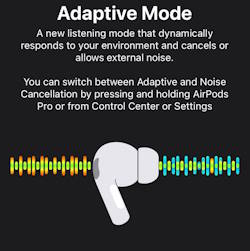
This AirPods guide explains the new features for AirPods Pro in iOS 17: mute and unmute, adaptive mode, conversation awareness, and personalized volume to help you effectively use your AirPods Pro, especially AirPods Pro 2.

Please note the USB-C version of AirPods Pro 2 does not add any new features other than the USB-C port, compared to the old lightning port version. None of the AirPods products support Hi-Res Audio. They only support SBC and AAC codecs.

What are the top 4 new features for AirPods Pro in iOS 17?

After updating your iPhone to iOS 17, firmware for AirPods Pro should be updated automatically. You can then access the new features for AirPods Pro in iOS 17, in addition to the existing features of AirPods Pro 2 (2nd Generation) or AirPods Pro (1st generation).

The top 4 new features for AirPods Pro in iOS 17 include:

  1. Mute and Unmute during a phone call.
  2. Adaptive Mode.
  3. Conversation Awareness.
  4. Personalized Volume.

Let's go through them one by one now.

Apple AirPods Pro (2nd Generation) Wireless Ear Buds with USB-C Charging, Up to 2X More Active Noise Cancelling Bluetooth Headphones, Transparency Mode, Adaptive, Personalized Spatial Audio, White
  • RICHER AUDIO EXPERIENCE — The Apple-designed H2 chip helps to create more intelligent noise cancellation and deeply immersive sound. The low-distortion, custom-built driver delivers crisp, clear high notes and full, rich bass in stunning definition.
  • NEXT-LEVEL ACTIVE NOISE CANCELLATION — Up to 2x more Active Noise Cancellation for dramatically less noise when you want to focus. Transparency mode lets you hear the world around you, and Adaptive Audio seamlessly blends Active Noise Cancellation and Transparency mode for the best listening experience in any environment.
  • CUSTOMIZABLE FIT — Includes four pairs of silicone tips (XS, S, M, L) to fit a wide range of ears and provide all-day comfort. The tips create an acoustic seal to help keep out noise and secure AirPods Pro in place.
$269.29
Buy on Amazon

Mute and Unmute during a phone call

You can now mute and unmute yourself during a phone call on the AirPods directly. This new feature for AirPods Pro in iOS 17 is available on AirPods Pro (1st Gen), AirPods Pro 2 (2nd Gen), AirPods 3, AirPods 3 Pro, and AirPods Max.… Read the rest

Unleashing the Power of LDAC Codec: How to Enable Hi-Res Audio on Android Devices with WF-1000XM4, WF1000-XM5, WF-1000XM6, and WH-1000 series?

Bluetooth headphones, Headphone 101, noise cancelling headphones, wireless earbuds

the Power of LDAC Codec: How to Enable Hi-Res Audio on Android Devices with WF-1000XM4, WF1000XM5, and WH-1000 series?

With the release of Sony WH-1000XM6, Sony WF-1000XM5 and WH-1000XM5, more and more owners are wondering how to enable Hi-Res audio, which is one of the key features of high-end Sony wireless headphones and earbuds, in addition to the signature noise canceling feature.

This guide explains and shows you how to use LDAC codes to enable Hi-Res audio on Android devices so that you can enjoy the best quality audio you have paid for. Detailed step-by-step instructions are included. Questions you may have on LDAC codec and Hi-Res audio are also answered.

This guide applies to all wireless headphones and earbuds with LDAC codec support. We use Sony WF-1000XM4, WF-1000XM5, WF-1000XM6, and WH-1000 series just as examples.

Background info on Bluetooth codecs and Hi-Res audio

Bluetooth codec and Hi-Res audio were discussed thoroughly in other posts. In this post, we will focus on how to use LDAC codec and enable Hi-Res audio on Android devices.

However, some readers may need some background info.

Bluetooth audio sucks.

Many cheap wired headphones are better than high-end wireless headphones.

Most wireless earbuds, including the AirPods Pro series, Sony WF-1000 series, and the Bose QuietComfort Earbuds series, are inferior to most cheaper wired headphones.

But Bluetooth audio solves the problem when “wire” is unavailable (or not an option). Especially in the current market, almost all “flagship” or high-end phones have removed the most useful (for audiophiles) 3.5mm audio jack. You may have to look for a Bluetooth headset or wireless earbuds.

Bluetooth codec makes a difference.

All Bluetooth “audio” devices must support the baseline codec: SBC (subband codec), which is part of the Advanced Audio Distribution Profile (A2DP). This guarantees that all Bluetooth headphones or earbuds work with all “sending” devices (e.g., iPhone and Android phones).

AAC (Advanced Audio Coding) was standardized by ISO and IEC. Almost all headphones and earbuds manufacturers support it, although it is not royalty-free. Generally, AAC offers better (arguable)audio quality than SBC with the same bandwidth. Of course, this depends on the implementation of the sending and receiving devices.

Hi-Res means different in file format and Bluetooth codec.

When talking about individual music files, Hi-Res usually means either uncompressed (e.g., WAV) or compressed but lossless (e.g., FLAC and ALAC). MP3 and AAC are two common examples of the opposite side: compressed and lossy.

For the codec, the Japan Audio Society certifies Hi-Res Audio … Read the rest

AirPods Pro 2 New features explained

Bluetooth headphones, noise cancelling headphones, wireless earbuds

AirPods Pro 2 New features

You should understand AirPods Pro 2 new features before deciding whether to upgrade or switch to it.

As the 2nd generation of AirPods Pro, you'd expect many cool new improvements and upgrades in the AirPods Pro 2 (aka AirPods Pro 2nd Gen).

This AirPods guide explains the major AirPods Pro 2 new features you should know, including the H2 chip, touch control, skin-detection sensor, adaptive transparency mode, improved noise cancellation, personalized spatial audio, longer battery life, a speaker and U1 chip in the case.

Update: with the release of iOS 17, some new features were added to AirPods Pro 2, including mute and unmute, adaptive mode, conversation awareness, and personalized volume. Please read this guide for a detailed explanation of these new features in iOS 17.

H2 chip

H2 chip is the heart of AirPods Pro 2 and even AirPods Pro 3.

Most of the AirPods Pro 2 new features and improvements can be traced back to the new chip.

Among Apple silicon, the “H” series is dedicated to headphones. Except for the original AirPods, all prior AirPods (AirPods 2, AirPods 3, AirPods Pro, AirPods Max) were powered by the H1 chip.

AirPods Pro 2 is the first AirPods powered by the latest H2 chip. Most of the AirPods Pro 2 new features rely on this new chip.

Apple did not release the technical specs of the H2 (and H1) chips. But the improvements can be read from the claimed 2x noise cancelling capability, adaptive transparency mode, better sound quality, and lower power consumption (longer playtime).

Please note AirPods Pro 2 still does not support any advanced codec, e.g., aptX or LDAC. So, you are still limited by the AAC regardless of the music source. In comparison, Galaxy phones with Galaxy Buds 2 Pro or Galaxy Bud 3 Pro can enjoy Hi-Fi level music withSamsung Seamless Codec. Sony WF-1000XM4/XM5/XM6 with Android phones can even enjoy Hi-Res audio with the LDAC codec.

Touch controls

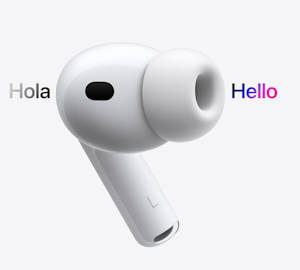
Although AirPods Pro 2 looks similar to AirPods Pro with stems, touch controls were added to AirPods Pro 2's stems.

AirPods Pro 2 New features explained: touch controls
AirPods Pro 2 New features explained: touch controil

Instead of relying on pressing force sensors, AirPods Pro 2 adds touch sensors and therefore, you can have more controls from the stem.

One of the most welcomed new controls from the … Read the rest

What is Samsung Seamless Codec? 4 things you should know about this new codec

Bluetooth headphones, Headphone 101, noise cancelling headphones

What is Samsung Seamless Codec?

With the release of Galaxy Buds 2 Pro, Samsung touted the 24bit Hi-Fi audio, which is enabled by the Samsung Seamless Codec. Samsung shared very little technical information about this codec except for some marketing exaggerations.

Many Galaxy Buds 2 Pro owners have some questions about the Samsung Seamless Codec, for example, how “better” it is.

This Bluetooth headphone guide explains the four aspects of this new codec:

  • When/where can you get and use Samsung Seamless Codec?
  • The relationship between Samsung Seamless Codec and Scalable Codec.
  • How better is Samsung Seamless Codec compared to other codecs?
  • The role of a codec (like Samsung Seamless Codec) in the Bluetooth streaming process.

Currently, Galaxy Buds 2 Pro is the only (Galaxy Buds 3 and Galaxy Buds 3 Pro also support Samsung Seamless Codec) wireless earbuds that support Samsung Seamless Codec. Very likely, new earbuds will be added to the list.

#1. Samsung Seamless Codec is proprietary and only works on Samsung devices

First, Samsung Seamless Codec (SSC) is proprietary, and Samsung owns it. No other hardware manufacturers have licensed it yet.

So, currently, it is only available on Samsung devices and works only on Samsung devices.

This means if you want to enjoy the Hi-Res audio with Galaxy Buds 2 Pro, you have to use it with a supported Samsung phone or tablet.

Samsung Seamless Codec is supported in Samsung phones and tablets with Android 11, 12 or 13. For example, Galaxy S10, S20, S21, S22, Galaxy Note 10, and Note 20 are all on Android 12. So, you can pair Galaxy Buds 2 Pro with any of these phones (and some Galaxy A and J series) and try the Hi-Res audio codec.

For headphones and earbuds, currently, Samsung Seamless Codec (SSC)is only available on Galaxy Buds 2 Pro, Galaxy Buds 3, and Galaxy Buds 3 Pro.

In short, Samsung Seamless Codec is only for the Samsung ecosystem. You cannot even try it if you are using a phone or tablet of other brands. Galaxy Buds 2 Pro itself is only a receiving (sink) device.

#2. Samsung Seamless Codec is a new version of Samsung Scalable Codec.

The name of the new codec is very confusing: it is too close to the existing Samsung Scalable codec (also abbreviated as SSC).

And the truth is that Samsung Seamless Codec is just a new … Read the rest

How to use widgets to check battery levels and control Galaxy Buds 2, Galaxy Buds Pro, Galaxy Buds Live, Galaxy Buds+, and Galaxy Buds?

Bluetooth headphones, Samsung Galaxy Buds, wireless earbuds

use widgets to check battery levels and control Galaxy Buds 2, Galaxy Buds Pro, Galaxy Buds Live, Galaxy Buds+, and Galaxy Buds

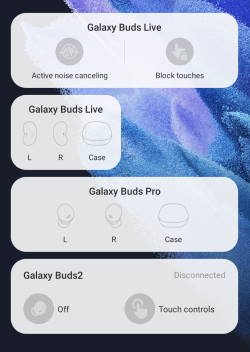
You can use widgets on Android devices to check battery levels and control Galaxy Buds devices, including Galaxy Buds 3, Galaxy Buds 3 Pro, Galaxy Buds 2, Galaxy Buds Pro, Galaxy Buds Live, Galaxy Buds+, and Galaxy Buds.

So, you may save some time by skipping the Galaxy Wearable app to check battery levels and quickly control Galaxy Buds devices directly from the home screen of your Android phone.

This Galaxy Buds guide explains how to add the widget to the Home screen of your Android devices, how to customize it, and how to use the widget to check battery levels and control your Galaxy Buds.

Please note, this feature is only available on Android devices (not just on Samsung Galaxy phones). And it is available for all Galaxy Buds released so far. However, Samsung hasn't released this feature to iOS users.

What Galaxy Buds devices are supported by the widget?

Currently, all Galaxy Buds, including Galaxy Buds, Galaxy Buds+, Galaxy Buds Live, Galaxy Buds Pro, Galaxy Buds 2, Galaxy Buds 2 Pro, Galaxy Buds 3, and Galaxy Buds 3 Pro are supported.

But each model has its own plugin in the Galaxy Wearable app. And therefore, each model of these buds needs separate widgets.

For example, if you have both Galaxy Buds Live and Galaxy Buds 2, you will have to add the widgets for these two earbuds separately.

Again, although iOS 14 and later versions support widgets, Samsung hasn't added widget support in iOS. So you cannot use the widget to control any Galaxy Buds on iOS.

Please note that on iOS, only Galaxy Buds+ and Galaxy Buds Live are supported. Other Galaxy Buds can only be used as a normal Bluetooth headset (without any additional controls).

Steps to add Galaxy Buds widget to the Home screen

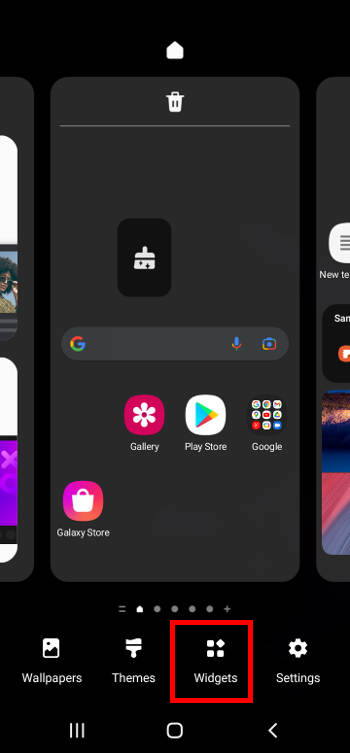
To add the Galaxy Buds Live widgets, for example, on Galaxy S21, you can tap and hold (or pinch) any blank area on the Home screen to enter the Home screen edit mode.

This method works on all Samsung Galaxy phones and the majority of other Android devices.

Once in the home screen edit mode, you can tap the Widgets button, as shown below.

Home screen edit mode on Samsung Galaxy phones (S21 as an example).
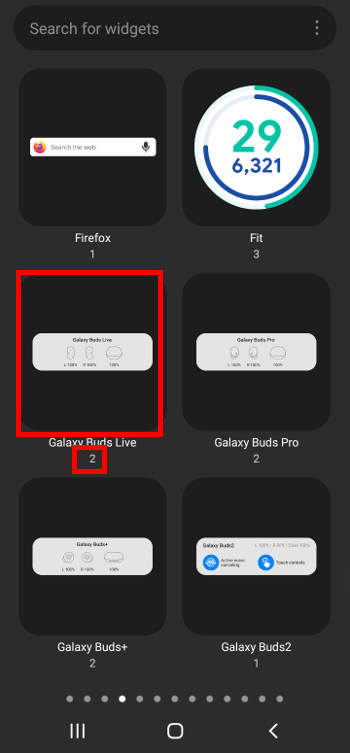
widget screen on Samsung Galaxy S21

Now, on the widgets screen, you can find all available widgets that could be added to the Home screen. Widgets are organized by the parents' apps, which … Read the rest

AirPods 3 vs AirPods Pro: which one should you choose?

Bluetooth headphones, noise cancelling headphones, wireless earbuds

AirPods 3 vs AirPods Pro: which one should you choose?

As AirPods 3 is the latest model of Apple's wireless earbuds for the mass market, you may want to know how it compares to AirPods Pro (i.e., AirPods 3 vs AirPods Pro).

This AirPods guide explains the shared features of AirPods 3 and AirPods Pro (the Force Sensor, Spatial Audio, Adaptive EQ, IPX4 rating, and wireless charging), advantages and disadvantages (silicon tips, ANC, transparency mode, battery life, and price) of AirPods 3 vs AirPods Pro.

The comparison of AirPods 3 to AirPods 2 is discussed in this post.

In iOS 17, both AirPods 3 and AirPods Pro can now use the force sensor to mute and unmute during a call.

AirPods 3 vs AirPods Pro: What are shared?

AirPods 3, which is the successor of AirPods 2, is not a replacement for AirPods Pro. Instead, it targets a different audience with some shared features with AirPods Pro.

Here is the list of shared features of AirPods 3 and AirPods Pro

  • Force Sensor.
  • Spatial Audio.
  • Adaptive EQ.
  • Sweat and Water Resistance (IPX4 rating).
  • Wireless charging.

These features were explained in the Top 10 new features of AirPods Pro, and AirPods 3 vs AirPods 2: Top 8 improvements and new features of AirPods 3.

AirPods 3 vs AirPods Pro: Advantages of AirPods Pro

You may find the new AirPods 3 lacks the following three features when comparing AirPods 3 vs AirPods Pro.

Silcion tips

Although AirPods 3 looks closer to AirPods Pro than to AirPods 2 (for example, the shape, and the length of the stem/leg), you can easily differ AirPods 3 vs AirPods Pro due to lack of chargeable silicon tips.

The small silicon tips actually mark a fundamentally different design.

AirPods 3 adopts the “open” design, as in AirPods 2. This design does not create a “sealed” space for the sound from the wireless earbuds.

On the contrary, the silicon tips and other parts in the AirPods Pro create (at least attempt to) a sealed environment in the canal for the earbuds. Such a sealed environment is usually needed for active noise cancelling (ANC). Samsung Galaxy Buds Live is the only exception combining open design and ANC.

Some users may feel more comfortable with the open design, especially if they need to wear the earbuds for an extended period every day.

But if you prefer a quiet environment, then AirPods Pro … Read the rest

  • « Go to Previous Page
  • Page 1
  • Page 2
  • Page 3
  • Go to Next Page »

Primary Sidebar

Get the best joke book!

The ultimate collection of narrative humor, organized by location. From the boardroom to the bedroom, never run out of things to say again.

Subscribe

Hi there 👋
It’s nice to meet you.

Sign up to receive awesome content updates in your inbox every month.

We don’t spam! Read our privacy policy for more info.

Check your inbox or spam folder to confirm your subscription.

RSS Galaxy S25 Guides

  • All New Features of One UI 8 (Android 16) Update for Galaxy S25, S24, S23, and S22
  • One UI 8 Update Highlights for Galaxy S25, S24, S23, and S22
  • How to manage camera modes on Galaxy S25 (and Galaxy S24, S23, S22, and S21 with One UI 7 update)?
  • How to Use Galaxy S25 Camera App?
  • A Definite Guide to Galaxy S25 Flipsuit Case
  • How to Access and Customize Now Brief on Galaxy S25?
  • Meaning of Galaxy S25 Status Icons and Notification Icons
  • Layout of Galaxy S25, S25+, and S25 Ultra
  • New Galaxy AI features in Galaxy S25, S25+, and S25 Ultra
  • Top 10 new features of Galaxy S25, S25+, and S25 Ultra

RSS Galaxy S24 Guides

  • The definitive guide to One UI 7 (Android 15) update for Galaxy S24, S23, S22, and S21
  • The Definitive Guide to Galaxy AI on Galaxy S24, S23, S22, Fold 6, Fold 5, Flip 6, and Flip 5
  • Use the Light Performance Profile to Extend Battery Life and Reduce Heat on Galaxy S24, S23, S22, and S21 (all Samsung Galaxy Phones with Android 14/One UI 6.0)
  • How to adjust lock screen timeout on Galaxy S24, S23, S22, and other Galaxy devices?
  • How to use Circle to Search on Galaxy S24?
  • Meaning of Galaxy S24 status icons and notification icons on Galaxy S24, S24+, and S24 Ultra
  • Samsung Galaxy S24 Smart View Wallet Case: A Definite Guide
  • Understand Galaxy S24 Camera App

RSS Galaxy S23 Guides

  • Explanation of all One UI 6.1 features for Galaxy S23, S23+, S23 Ultra, and other Galaxy devices
  • How to use One-Tap Editing in the Android 14 (One UI 6) update?
  • How to enable and use Auto Scan to scan documents automatically on Galaxy S23, S22, and S21?
  • New camera features in One UI 6 (Android 14) update for Galaxy S23, S22, and S21
  • Galaxy S23 User Manual in American English with Android 14 (One UI 6) Update

RSS Chromecast Guides

  • How to enable developer options in Chromecast with Google TV and Google TV Streamer?
  • Meaning of LED light on voice remote for Chromecast with Google TV and Google TV Streamer
  • What’s new in Chromecast 2018 (3rd gen of Chromecast)?
  • How to use VLC media player on PC to stream music and video to Chromecast and Chromecast Audio?
  • How to use Chromecast Ultra to stream 4K content?

RSS Galaxy S22 Guides

  • A Complete Guide for Android 14 (One UI 6) Update on Samsung Galaxy Devices
  • How to touch and hold to customize Lock Screen on Galaxy S22, S21, and S20 with the Android 13 update?
  • How to use Maintenance Mode on Galaxy S23, S22, S21, and S20 with Android 13 (One UI 5)?

RSS Samsung Galaxy S21 Guides

  • Top 12 new features in Android 12 update for Galaxy S21, S20 and S10
  • Android 12 update vs One UI 4.0 vs One UI 4.1: update Galaxy S21, S20 and S10 to Android 12
  • How to set and resize photo size on Samsung Galaxy S21, S20, S10, and S9 without using any third-party apps?
  • How to Customize Galaxy S21 Home Screen?
  • Master Galaxy S21 Lock Screen Settings

RSS Galaxy Note Guides

  • Top 11 disappointments of Galaxy Note 20 and Galaxy Note 20 Ultra
  • How to use the Dynamic Lock screen on Galaxy Note 10?
  • Galaxy Note 10 LED View Cover Guide and Review

RSS Neato XV Guides

  • Neato XV Revival Guide: Repair, Hack & Restore (The 2026-2027 Edition)
  • The Scavenger’s Guide: How to Buy “Broken” Neato XVs for $20 (And Fix Them)
  • 3D Print Your Own Spare Parts: The Neato XV STL Guide
  • Stop Guessing: How to Use NeatoControl to “X-Ray” Your Robot
  • The Forbidden Upgrade: Neato Firmware Update to Vorwerk VR100 (Offline Guide)
  • The Vault: Neato XV & Vorwerk VR100 Software Repository
  • Neato Charging Station Blinking Green? The $2 C10 Capacitor Fix
  • Neato Error 3000 Fix: Lidar Motor & Belt Replacement Guide (XV-21, XV-15, XV-13, XV-11)
  • The Battery Dilemma: How to Double Your Neato XV’s Runtime (NiMH vs. Lithium)?
  • Why the “Ancient” Neato XV is Better Than Modern Robots (In 2025 and 2026)

Recent Posts

  • Understand The Physics of Open-Ear Directional Audio
  • Bone Conduction Headphones Buyer’s Guide: 2026 Edition
  • Bone Conduction Audio Technology: A Technical Breakdown
  • Science And Architecture of Bluetooth Auracast
  • Bluetooth LE Audio and the LC3 Codec: A Technical Deep Dive
  • About
  • 101
  • Bluetooth
  • ANC
  • Sports
  • AirPods

© 2019–2026 · HeadphoneGuidePro.com is an online community for headphone owners! · Hosted by PTRHosting
· Powered by Genesis framework for WordPress
Guide for choosing and using headphones including wired headphones, Bluetooth headphones, wireless earbuds, noise-canceling headphones and sports headphones

Disclaimer: All the information provided on this website is provided on an "as is" and "as available" basis and you agree that you use such information entirely at your own risk. We are not affiliated with any manufacturers/brands/organizations.

Add Headphone Guide Pro to your Homescreen!

Add
pixel